L'angelo con la chiave dell'abisso
L'angelo con la chiave dell'abisso | Stampe | DURER Albrecht
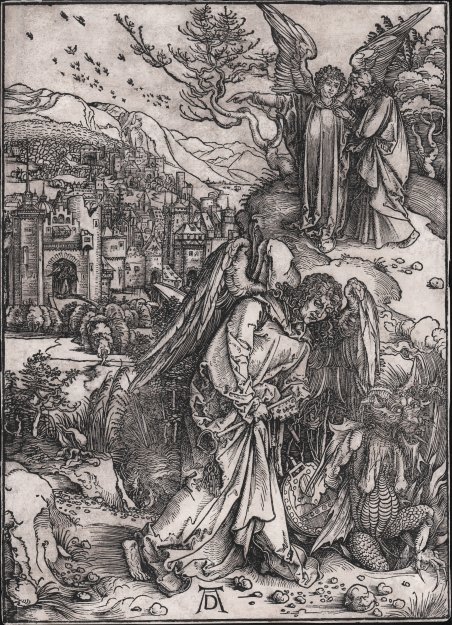
L'angelo con la chiave dell'abisso
L'angelo con la chiave dell'abisso | Stampe | DURER Albrecht
Metodi di Pagamento
- PayPal
- Carta di Credito
- Bonifico Bancario
- Pubblica amministrazione
- Carta del Docente
Dettagli
- Anno di pubblicazione
- 1496
- Formato
- 283 X 393
- Incisori
- DURER Albrecht
Descrizione
L'angelo con la chiave dell'abisso; in primo piano l'angelo incatena Satana nell'abisso, sullo sfondo un angelo mostra a San Giovanni una città che rappresenta la Nuova Gerusalemme. Xilografia, circa 1496-97, firmata nel blocco in basso al centro con il monogramma AD. Magnifica prova, ricca di toni, impressa su carta vergata coeva senza filigrana, rifilata alla linea marginale, minimi restauri perfettamente eseguiti agli angoli superiori e nellâarbusto superiore, per il resto in buone condizioni. Questa è la sedicesima e ultima xilografia dell'Apocalisse di Dürer. Dalla qualità dellâimpressione si potrebbe trattare di una delle prime impressioni, prima del testo, oppure appartenere all'edizione tedesca del 1498 (Norimberga, Anton Koberger) o all'edizione latina del 1511. In entrambe le edizioni del libro, infatti, questa xilografia - l'ultima della serie - rimane senza testo sul verso. Per mia esperienza, la carta sulla quale è impressa ricorda più quella dellâedizione del 1498 che del 1511. Tuttavia, la mancanza di una filigrana e il minimo spazio temporale che intercorre tra le tre tirature, impedisce di stabile con certezza a quale appartenga. Certo è, invece, che non si tratta di una tiratura postuma (dopo il testo latino) che Meder descrive con una mancanza di segno nel contorno delle montagne e nel braccio dellâangelo che indica Gerusalemme. âAlthough this is the last of the subjects in the bound edition of Dürer's "Apocalypse," by all indications it was executed at an early stage of the project. Wölfflin finds the angel with his arm extended something like a road sign, and the bottomless pit an oversimplified round hole with a manhole cover. Nevertheless, he appreciates the simplicity of the angel's gesture and of the three parallel vertical folds in his garment. His head bears a remarkable resemblance to that of the angel in "Agony in the Garden". St. John is remarkably well drawn, bent over forward, as if paying great attention. The angel in the foreground almost monopolizes the attention of the viewer, all but overpowering the vision of the âNew Jerusalemâ. The scene of the New Jerusalem does not occur in the Quentell Bible. Dürer pictures it as a medieval city with towers and churches, although in the text (Rev. 21: 22) churches are specifically excluded from the new city. Remarkably, Dürer pictures St. John's vision not as an ethereal cloud-borne, but as a very earthbound, Jerusalem. Intended as the last sheet, significantly, it carries no prediction of impending doom or the representation of the Last Judgment but instead a vista of a radiant, orderly, safe, and attainable abode, protected by guardian angels at its gates. As such, it conforms to Dürer's own words, written some two decades later in the diary of his journey to the Netherlands-in which he laments the fate of Luther: "O Lord, give us after this the new precious Jerusalem, which shall come down to us from heaven, as told in the Apocalypseâ (cf. W. Strauss, The Woodcuts and woodblocks of Albrecht Durer, p. 168). Bibliografia Meder, Dürer Katalog (178, German or Latin edition, without text); Bartsch, Le Peintre graveur (VII.129.75); Schoch, Albrecht Dürer, das druckgraphische Werk (II.126); W. Strauss, The Woodcuts and woodblocks of Albrecht Durer, 44.