Friedrich Preller junior
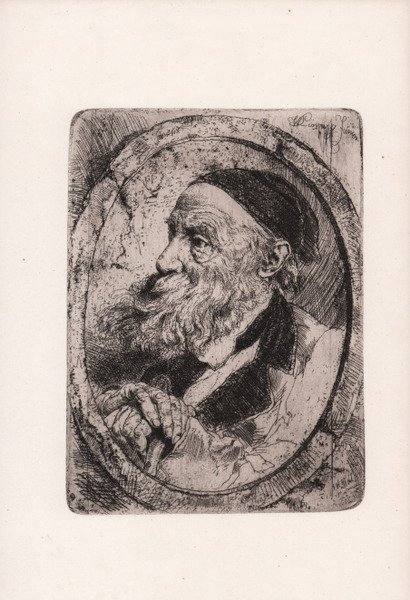
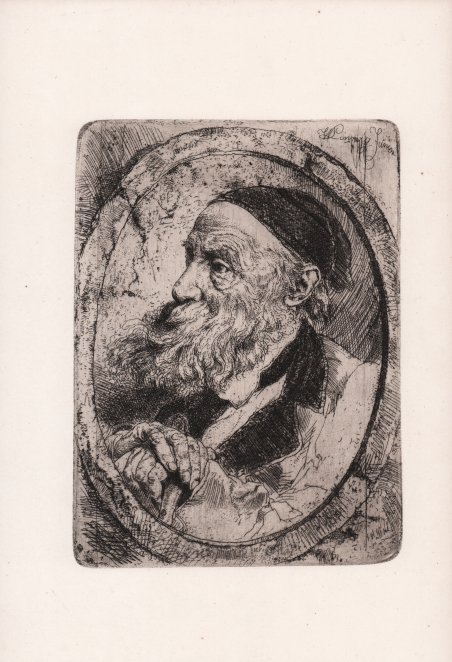
Friedrich Preller junior
Metodi di Pagamento
- PayPal
- Carta di Credito
- Bonifico Bancario
- Pubblica amministrazione
- Carta del Docente
Dettagli
- Anno di pubblicazione
- 1881
- Formato
- 130 X 180
- Incisori
- LINNIG William II
Descrizione
Acquaforte e puntasecca con tono di superficie. Firmata all'interno dell'immagine in basso a sinistra: "Willem Linnig Junior". Una bella impressione, stampata su carta vergata coeva, con margini, in ottime condizioni. Friedrich Preller (il Giovane) (1° settembre 1838 a Weimar - 21 ottobre 1901 a Blasewitz) è stato un pittore tedesco di paesaggio. Era il figlio più giovane del pittore, incisore e professore d'arte Friedrich Preller il Vecchio. Nel 1859, viaggiò in Italia con suo padre e, nel 1862, intraprese diverse escursioni sulla costa della Sicilia e di Napoli per vedere i paesaggi originali che aveva letto nell'Odissea. Nel 1864, fece un altro viaggio in Italia, tornando a Dresda nel 1866, dove stabilì il suo studio. Dieci anni dopo, godette dei suoi primi successi artistici e cominciò ad attirare commissioni. Nel 1880, divenne professore all'Accademia di Belle Arti di Dresda. Continuò a viaggiare molto, facendo viaggi di studio a Rügen e in Grecia, oltre che in Italia. Willem Linnig il Giovane (20 agosto 1842, ad Anversa - 3 settembre 1890, ad Anversa) è stato un pittore e incisore belga, meglio conosciuto per le sue scene storiche e di genere, paesaggi e nature morte. Conosciuto come "Il Giovane", nacque ad Anversa come figlio di Willem Linnig il Vecchio. ' Linnig fu un pittore e stampatore molto prolifico. Ha lasciato un gran numero di dipinti e 123 incisioni. Lavorò su una vasta gamma di soggetti: storia e scene di genere, paesaggi e nature morte. Delle 123 acqueforti prodotte da Linnig, 122 erano di sua creazione e una era un'acquaforte riproduttiva delle Ninfe e Satiri di Rubens. Disegnò le linee con grande cura nel suo lavoro grafico, ma mostrò anche un grande livello di esuberanza. Le opere di Linnig sono state presentate in una mostra del 1991, con un catalogo a cura di P. Verbraeken Linnig: Ein Antwerpse kunstenaarsdynastie in de 19de eeuw. Bibliografia P. Verbraeken, Linnig: Ein Antwerpse kunstenaarsdynastie in de 19de eeuw, n. 70. Etching and drypoint with surface tone. Lettered within image in upper right corner: "Willem Linnig Junior". From the series of etchings for 1881 published by the Gesellschaft für Radierkunst zu Weimar (the Society of Etchers in Weimar) A fine impression, printed on contemporary laid paper, with margins, very good condition. Friedrich Preller (the Younger) (1 September 1838 in Weimar – 21 October 1901 in Blasewitz) was a German land and seascape painter. He was the youngest son of the painter, etcher and art professor Friedrich Preller the Elder. In 1859, he travelled to Italy with his father and, in 1862, undertook several excursions to the coast of Sicily and Naples to see the original landscapes he had read about in the Odyssey. In 1864, he took another trip to Italy, returning to Dresden in 1866, where he established his own studio. Ten years later, he enjoyed his first artistic successes and began attracting commissions. In 1880, he became a professor at the Dresden Academy of Fine Arts. He continued to travel extensively, taking study trips to Rügen and Greece as well as Italy. Willem Linnig the Younger (August 20, 1842, in Antwerp - September 3, 1890, in Antwerp) was a Belgian painter and engraver, best known for his historical and genre scenes, landscapes and still lifes. Known as "The Younger", he was born in Antwerp as the son of Willem Linnig the Elder. ' Linnig was a very prolific painter and printmaker. He left behind a large number of paintings and 123 etchings. He worked on a wide range of subjects: history and genre scenes, landscapes and still lifes. Of the 123 etchings Linnig produced, 122 were of his own design and one was a reproductive etching of Rubens' Nymphs and Satyrs. He drew the lines with great care in his graphic work, but also showed a great level of exuberance. Linnig came from a dynasty of celebrated Belgian artists, whose output was surveyed in a 1991 exhibition, with a catalogue by P. Verbraeken et. al., Linnig: Ein Antwerpse kunstenaarsdynastie in de 19de eeuw. Bibliografia P. Verbraeken, Linnig: Ein Antwerpse kunstenaarsdynastie in de 19de eeuw, n. 70. Cfr.
