Titi Livii Historiarum Libri ex recensione Heinsiana
Titi Livii Historiarum Libri ex recensione Heinsiana | Libri antichi e moderni | LIVIUS, Titus (59 BC – 17 CE)-HEINSIUS, Daniel (1580–1655)
Titi Livii Historiarum Libri ex recensione Heinsiana
Titi Livii Historiarum Libri ex recensione Heinsiana | Libri antichi e moderni | LIVIUS, Titus (59 BC – 17 CE)-HEINSIUS, Daniel (1580–1655)
Metodi di Pagamento
- PayPal
- Carta di Credito
- Bonifico Bancario
- Pubblica amministrazione
- Carta del Docente
Dettagli
- Anno di pubblicazione
- 1634
- Luogo di stampa
- Leiden
- Autore
- LIVIUS, Titus (59 BC – 17 CE)-HEINSIUS, Daniel (1580–1655)
- Editori
- Ex officina Elzeviriana
- Soggetto
- seicento
- Stato di conservazione
- Buono
- Lingue
- Italiano
- Legatura
- Rilegato
- Condizioni
- Usato
Descrizione
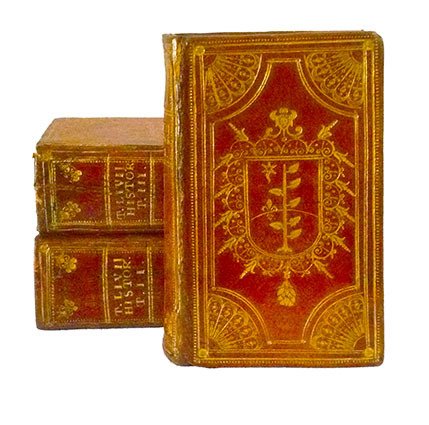
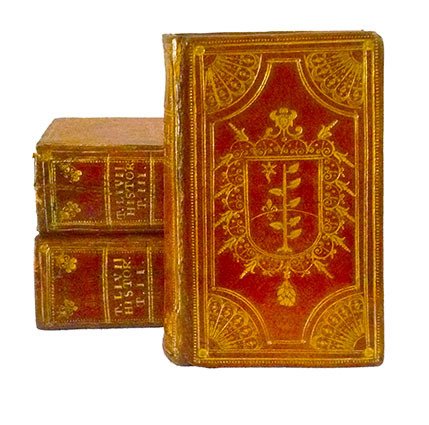
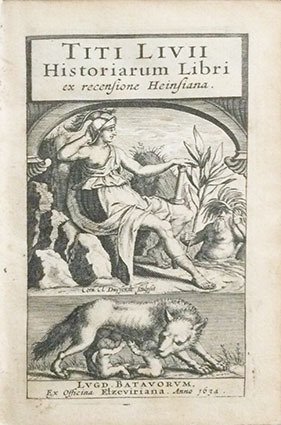
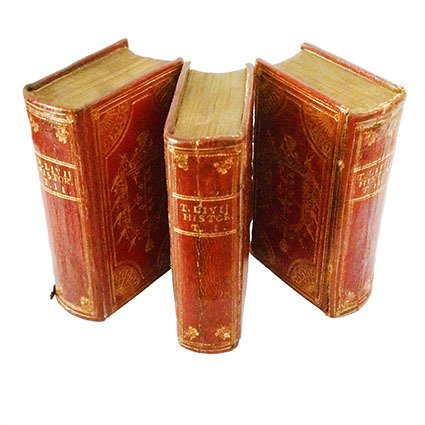
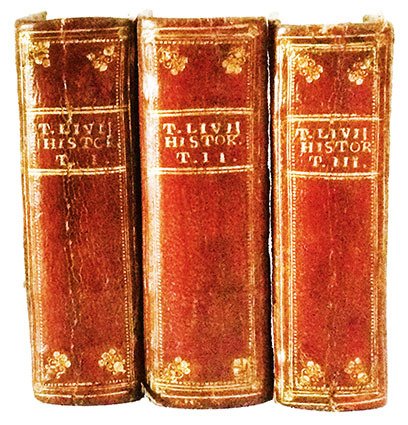
Three volumes, 12° (118 x 70 mm). Volume 1: [24], 726, [18] pp. *12, A- Z¹² AA-HH¹² ; Volume 2: 848, [16] pp. a-z¹² aa-nn¹² ; Volume 3: 796, [16] pp. aa-kkk¹² , lll10¹⁰ . Bound in contemporary red morocco, panels with gilt decorations (a shield with a branch with six leaves, a lily and a six-pointed star) within a double frame, gilt title and volume's number on the spines, gilt edges and marbled flyleaves (slightly worn and rubbed, back hinge in the third volume partially cracked). Engraved general title page on volume one (depicting a Muse and the Roman shewolf brestfeeding Romulus and Remus) signed by Cornelis Claesz. Duysend. Woodcut printer's device on the title page of second and third volume (T. Livii Patavini historiarum ab urbe condita, tomus secundus and tertius), head- and tail-pieces. It includes Daniel Heinsius' commentary on Livius and his dedication to Adrian Ploos van Amstel (16.?-1668, Knight of the Order of Saint Michael, Lord of Oudegeyn, Ordinary Deputy of the Federated General Order of the Provinces of Belgium). Slightly browned, some marginal staining, overall a good copy.
First Elzevier edition, edited by Daniel Heinsius, less correct than the second one printed in 1645, however "the most appreciated by amateurs because it is better printed" (Willems). Daniel Heinsius (1580–1655) was one of the most distinguished intellectuals of the Dutch Golden Age — a renowned scholar, poet, theologian, and classical philologist whose influence extended across Europe. Born in Ghent and later active in Leiden, he became a professor at the University of Leiden at a remarkably young age and earned international recognition for his mastery of Greek, Latin, and classical literature. Heinsius was especially admired for his editions and commentaries on ancient authors such as Aristotle, Horace, and Virgil, helping shape the study of classical texts in early modern Europe. Alongside his academic work, he wrote elegant Neo-Latin poetry and Dutch verse, combining Renaissance humanism with the intellectual spirit of the Protestant Netherlands. His correspondence and scholarship connected him with many of the leading thinkers of the 17th century, making him a central figure in European humanist culture.
Titus Livius historiographical work, Ab urbe condita libri, narrates the history of Rome from its mythical origins to the death of Drusus (9 BC) and the defeat of Teutoburg (9 AD). The work has an annalistic structure, as in the best Roman historiographical traditions, and therefore rejects the monographic model of Sallust. In this work, he mixes history and legend, especially regarding Rome's early phases, and often does not remain immune to Augustan propaganda. His historiography is not tragic, but it nonetheless makes the tragedy of its characters a central element, even from an artistic perspective. In a measured style, however, without the incursions made by Sallust, Livy clearly presents the events of history, often contained in the direct speeches of individual characters, which embody the moods of the crowd or of entire populations.
Willems, 405; OCLC, 5173553.