Selecta dramata diversis temporibus conscripta & in scena recitata.
Selecta dramata diversis temporibus conscripta & in scena recitata. | Libri antichi e moderni | RETTENPACHER, Simon P. (1634-1706)

Selecta dramata diversis temporibus conscripta & in scena recitata.
Selecta dramata diversis temporibus conscripta & in scena recitata. | Libri antichi e moderni | RETTENPACHER, Simon P. (1634-1706)
Metodi di Pagamento
- PayPal
- Carta di Credito
- Bonifico Bancario
- Pubblica amministrazione
- Carta del Docente
Dettagli
- Anno di pubblicazione
- 1683
- Luogo di stampa
- Salzburg
- Autore
- RETTENPACHER, Simon P. (1634-1706)
- Editori
- Typis Joan. Bapt. Mayr aulico-acad. Typogr. & Bibliopolae
- Soggetto
- seicento
- Stato di conservazione
- Buono
- Lingue
- Italiano
- Legatura
- Rilegato
- Condizioni
- Usato
Descrizione
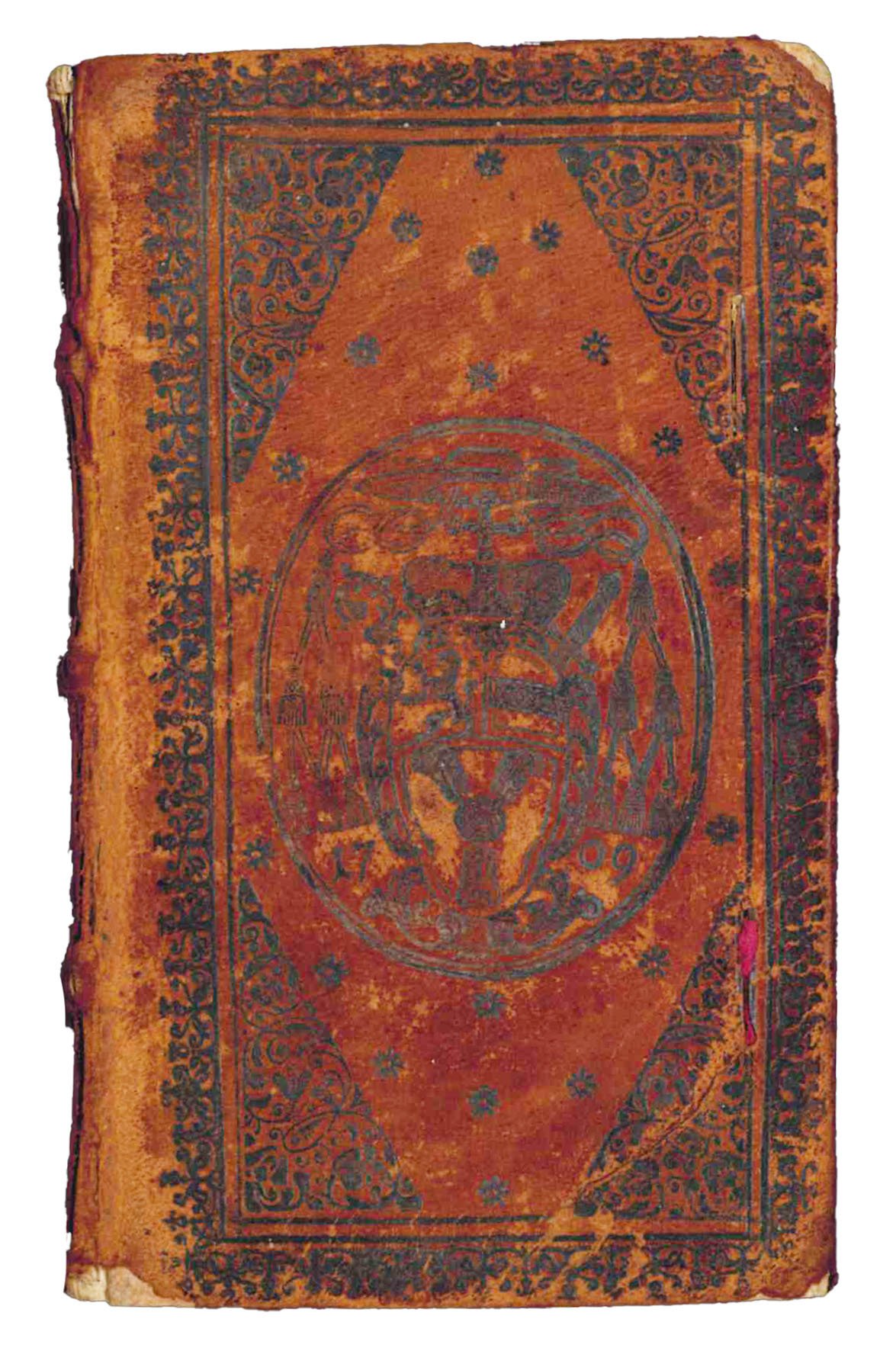
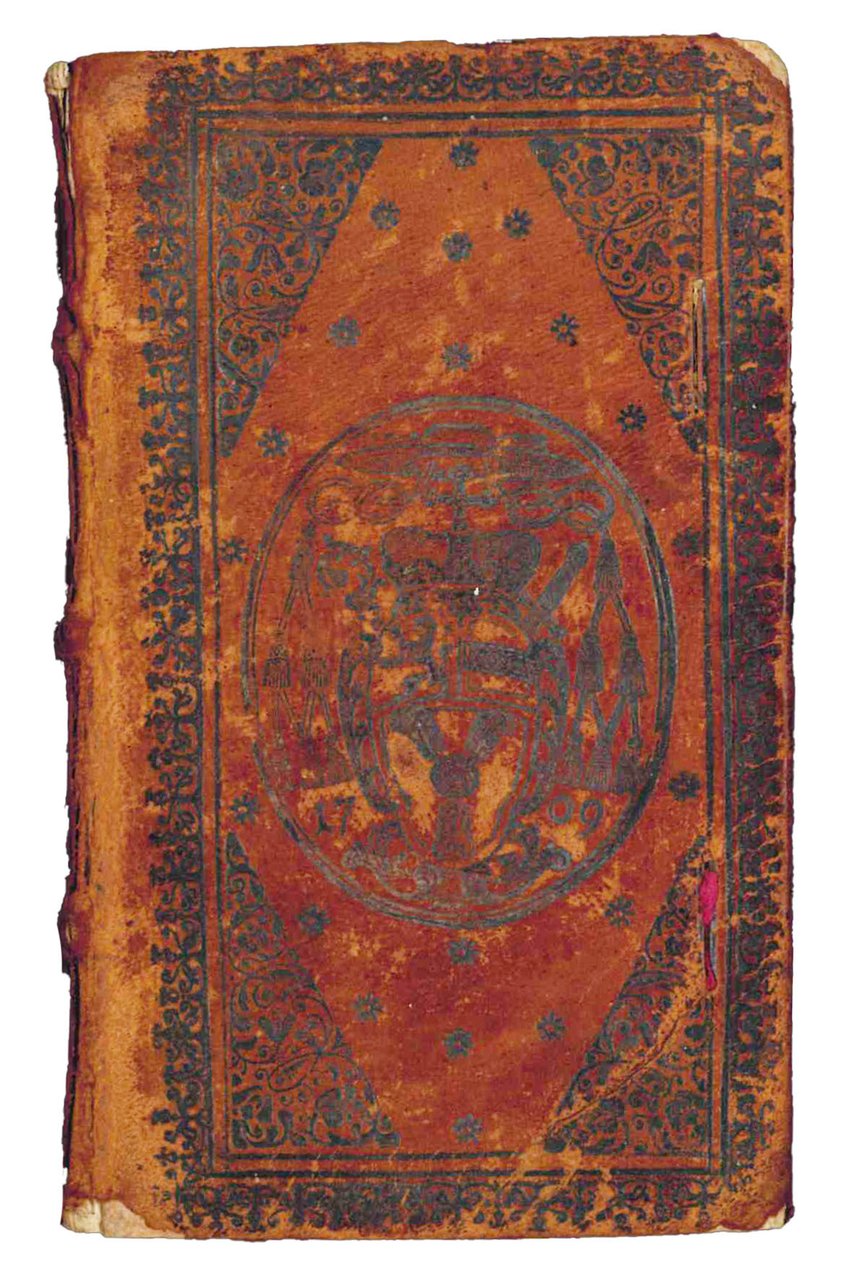
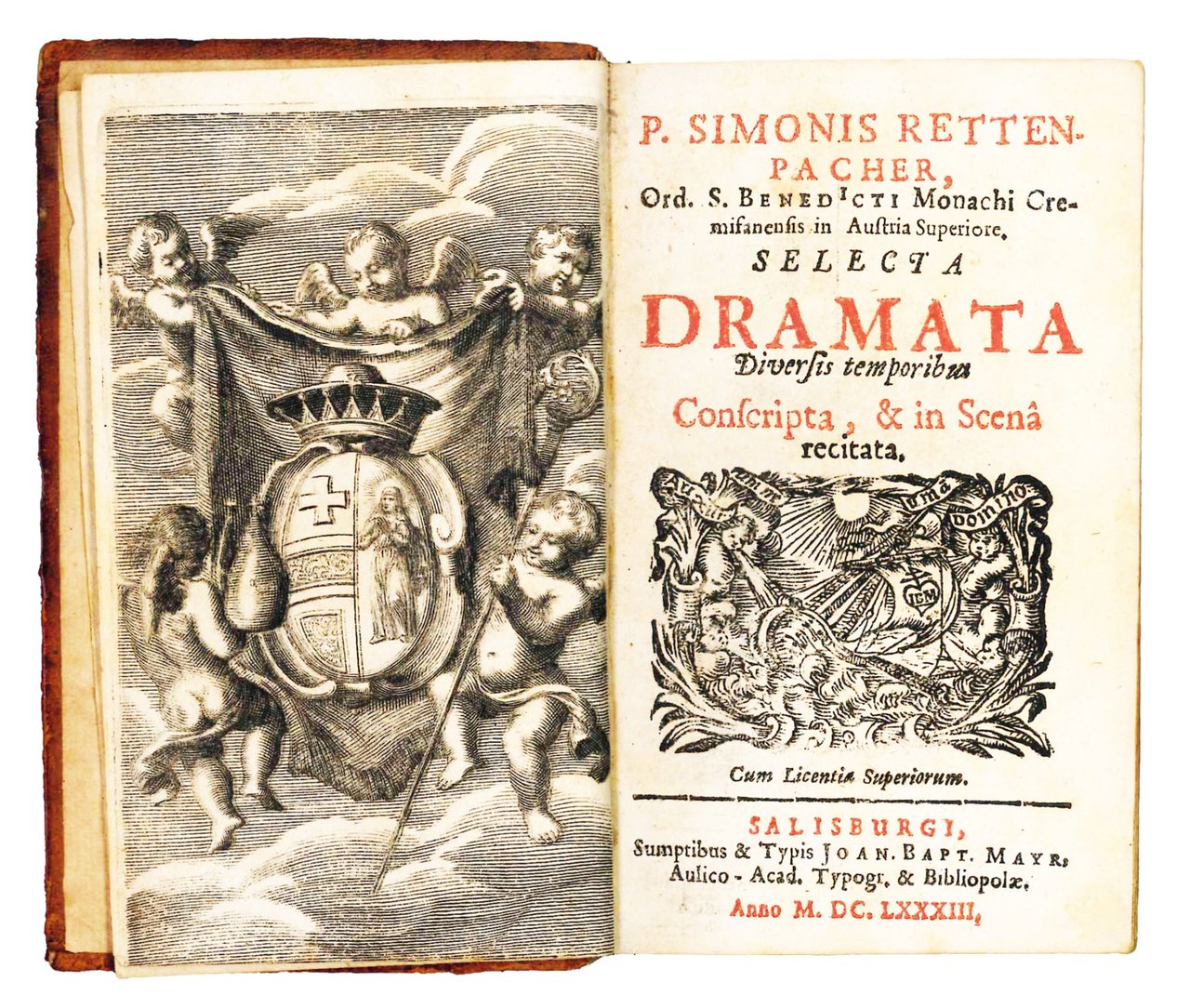
12° (130 x 77 mm). [XVI], 759 [recte 579], [3] pp. Collation: )(8 A-Z ¹² Aa² Bb⁴. Engraved frontispiece showing cupids holding a cloth and a shepherd's crook with the coat-of-arms (shield with a cross and the Virgin Mary praying with clasped hands) of Emerich Sinelli (Komárno, 29 giugno 1622 – Vienna, 23 febbraio 1685), bishop of Wien to whom the work is dedicated by the typographer Johann Baptist Mayr (1634–1703, prominent 17th-century printer, bookseller, and publisher based in Salzburg, Austria). Woodcut printer's device on the title page, historiated initials, head- and tail-pieces. Contemporary leather bindig, spine with raised bands and gilt-ruled ornaments, gilt edges, on the panels blind-tooled coat-of arms (shield with three feathers, sword, rearing lion and the episcopal hat, dated 1709) of the prince-bishop Franz Anton von Harrach zu Rorau (signs of silk ties, worn and rubbed, joints slightly opened). A good copy.
First edition. The volume collects various plays in Latin (Osiride; Atys; Demetrio; Perseo; Rosimundae; Calirrhoës ac Theophobi amores; Felix Laophili ac Irenes connubium; Ulisse; Drama musicum) by the Austrian Benedictine, Latin and German-speaking dramatist, lyric poet and chronicler Simon Rettenpacher (or Rettenbacher; 17 October 1634 at Hof Gänsbrunn zu Aigen bei Salzburg - 10 May 1706 in the Kremsmünster Abbey). The plays belong to the genre of Neo-Latin school drama, a form cultivated extensively in monastic and Jesuit educational contexts. These plays were composed in Latin not merely as literary exercises, but as pedagogical instruments designed to train students in rhetoric, poetics, and moral reasoning: Rettenpacher operated in an educational context in which the production and performance of Latin dramas was part of humanistic teaching, and it is likely that he participated actively in it as an author and monastic academic figure. Their performance formed an integral part of the curriculum, with students or monastic pupils enacting roles in carefully staged productions. Thematically, Rettenpacher's dramas draw on a wide spectrum of sources, including classical mythology (Perseus, Ulysses, Atys), ancient history (Demetrius), and allegorical or moral narratives (Felix Laophili ac Irenes connubium), reflecting the humanistic synthesis characteristic of Baroque intellectual life. The designation drama musicum is particularly significant: these works incorporated musical element, choral passages and instrumental interludes, aligning them with broader Baroque tendencies toward multimedia spectacle, so they may be situated along a continuum between spoken drama and early opera.
Franz Anton von Harrach was a preeminent figure of the Holy Roman Empire's ecclesiastical aristocracy. He served as the Prince-Bishop of Vienna (1702–1705) and subsequently as the Prince-Archbishop of Salzburg (1709–1727). In 1705, he was elevated to the rank of Fürst (Prince) by Emperor Joseph I. Born into the illustrious Harrach lineage, one of the most influential noble families of the Habsburg Monarchy, Franz Anton leveraged his familial connections to consolidate the political standing of the Archdiocese of Salzburg. Harrach is most notably remembered as a prolific patron of the arts and architecture. He was instrumental in shaping the "Salzburg Baroque" aesthetic, seeking to transform the city into a "Rome of the North." His most significant contributions include the redesigning of Schloss Mirabell by the architect Johann Lukas von Hildebrandt, the redecoration of Salzburg Residenz and perfecting several major ecclesiastical and civic structures that define Salzburg's UNESCO World Heritage skyline today (cf. Christoph Brandhuber, Recreatio principis. Fürsterzbischof Franz Anton Fürst von Harrach und seine „Retirade“, in: "Vision und Realität. Die Salisburgo Residenz 1587–1727 Österreichische Zeitschrift für Kunst und Denkmalpflege [ÖZKD]", LXIII, 2009, Heft 1/2, Corno/Vienna 2009, pp. 118–125).
Italian Union Catalogue, IT\