I marmi del Doni academico peregrino, cioè ragionamenti introdotti à farsi da varie conditioni d'huomini, à luoghi di honesto piacere in Firenze [...]. Diviso in quattro libri [...]
I marmi del Doni academico peregrino, cioè ragionamenti introdotti à farsi da varie conditioni d'huomini, à luoghi di honesto piacere in Firenze [...]. Diviso in quattro libri [...] | Libri antichi e moderni | DONI, Anton Francesco (1513 - 1574)
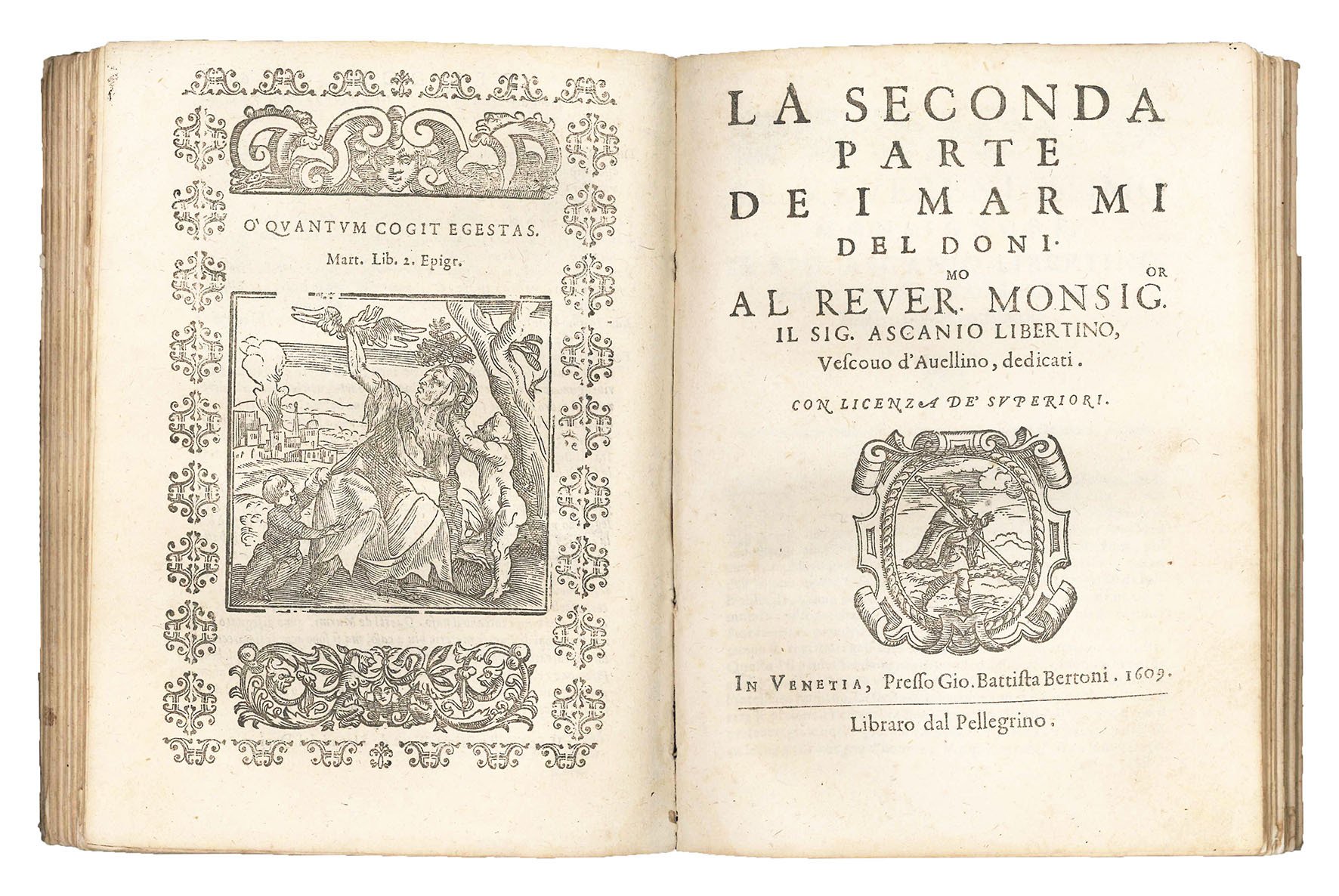
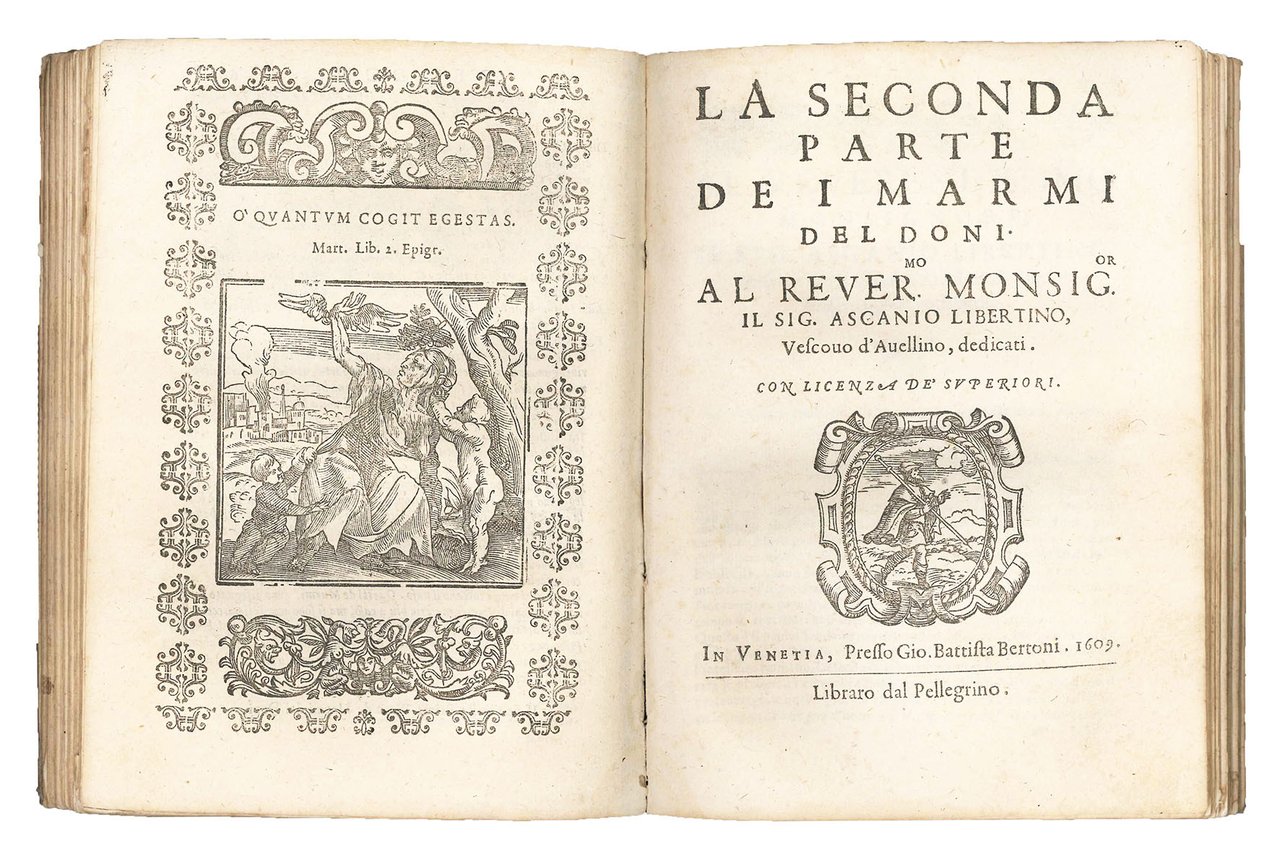
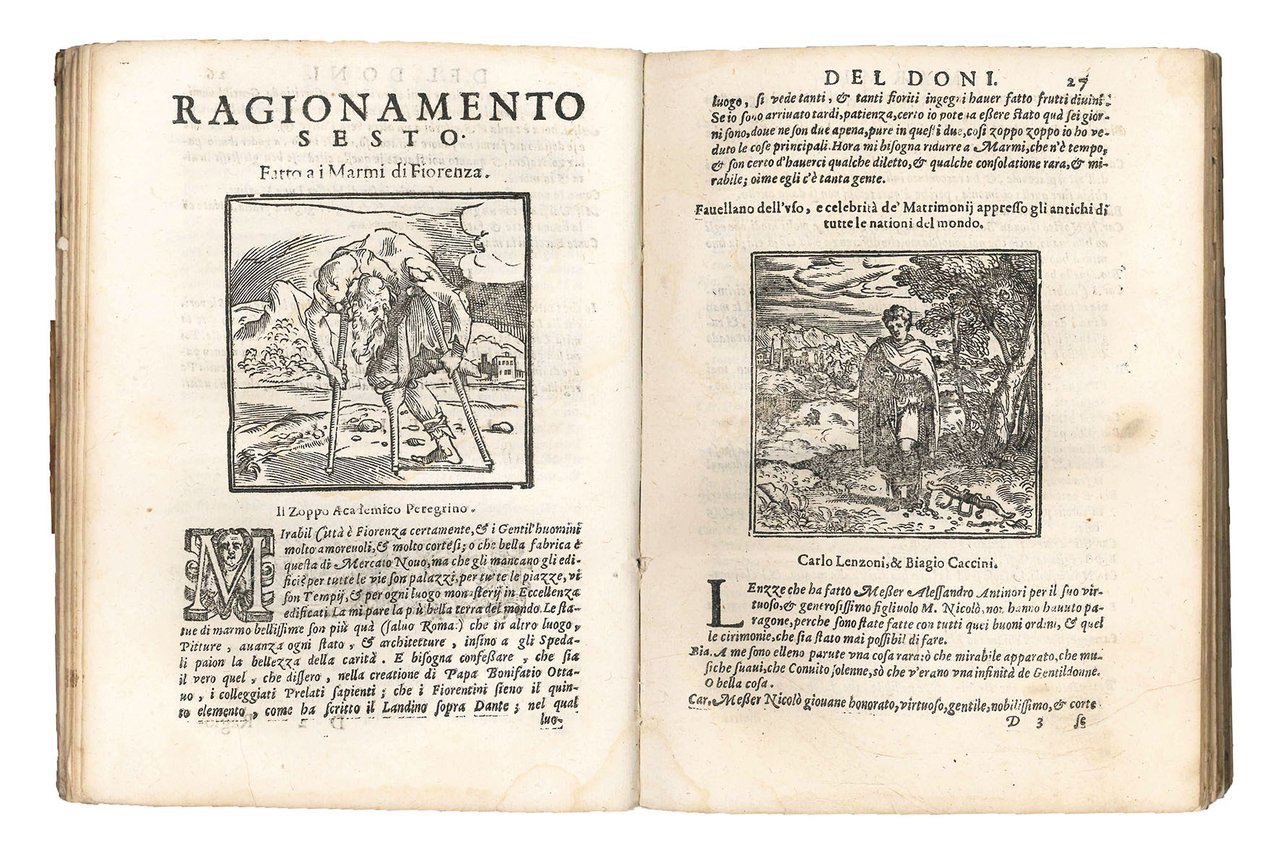
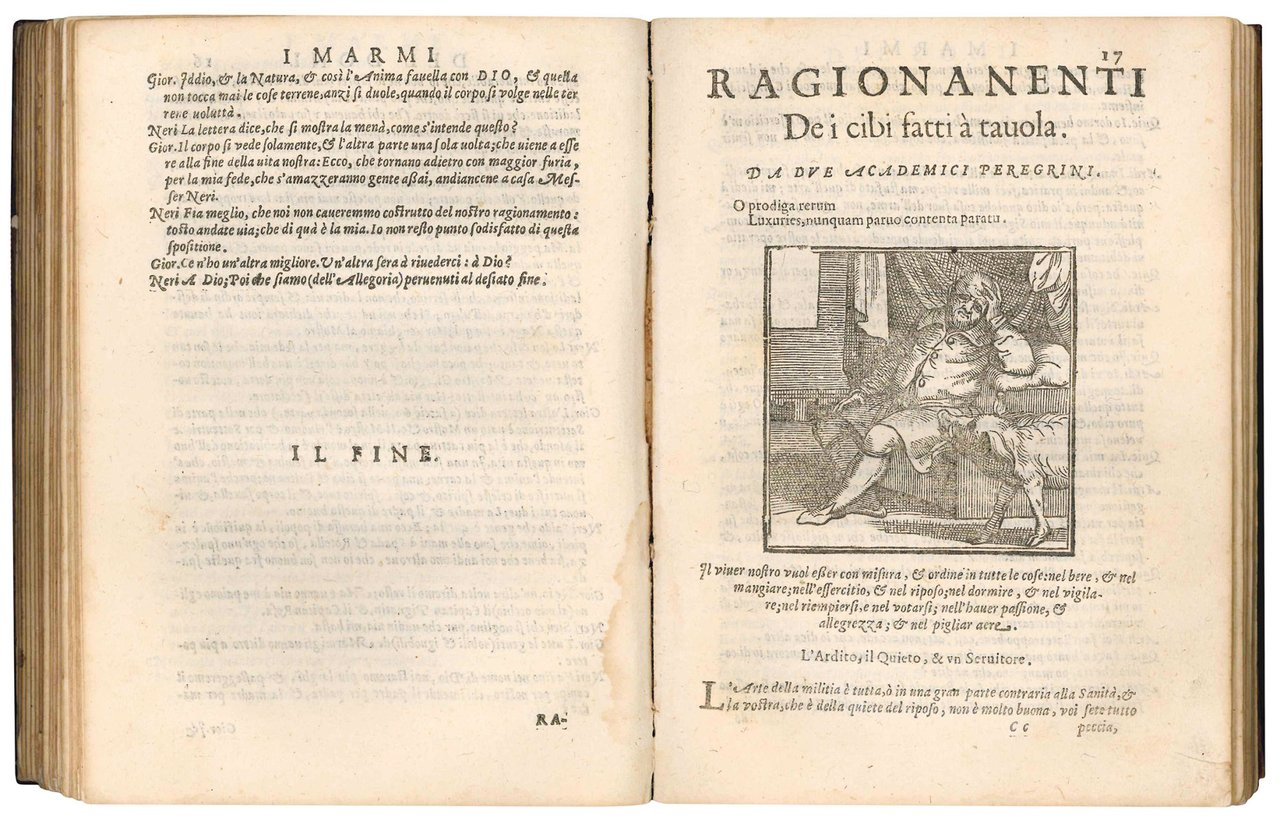
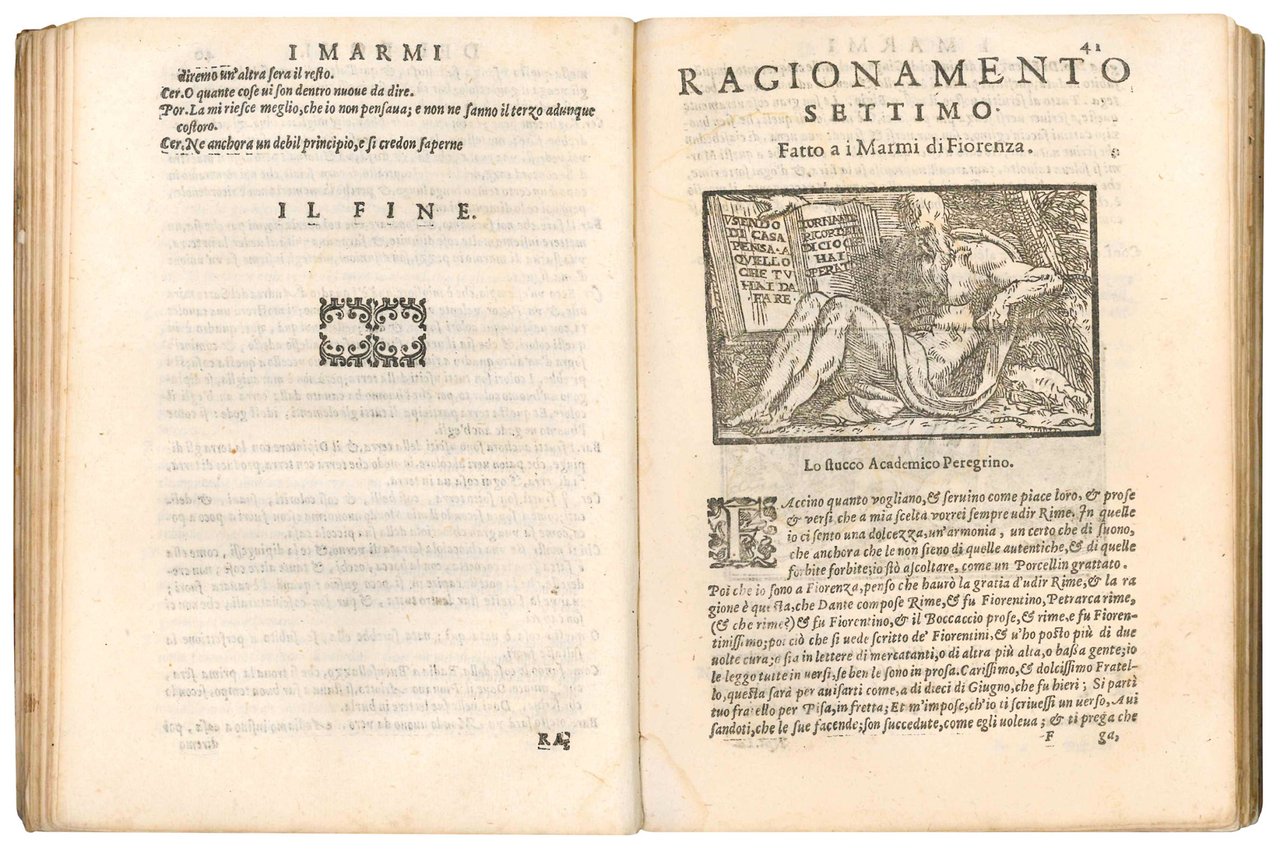
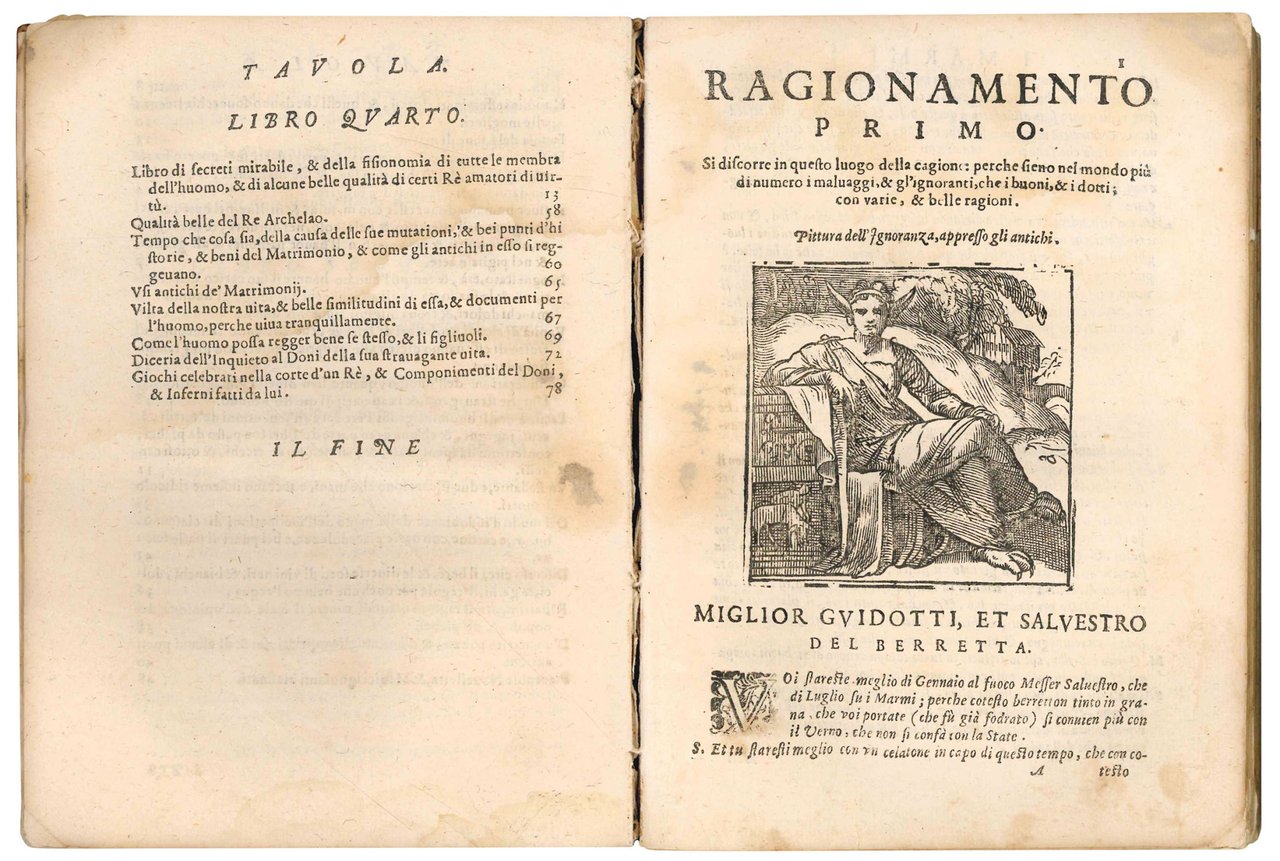
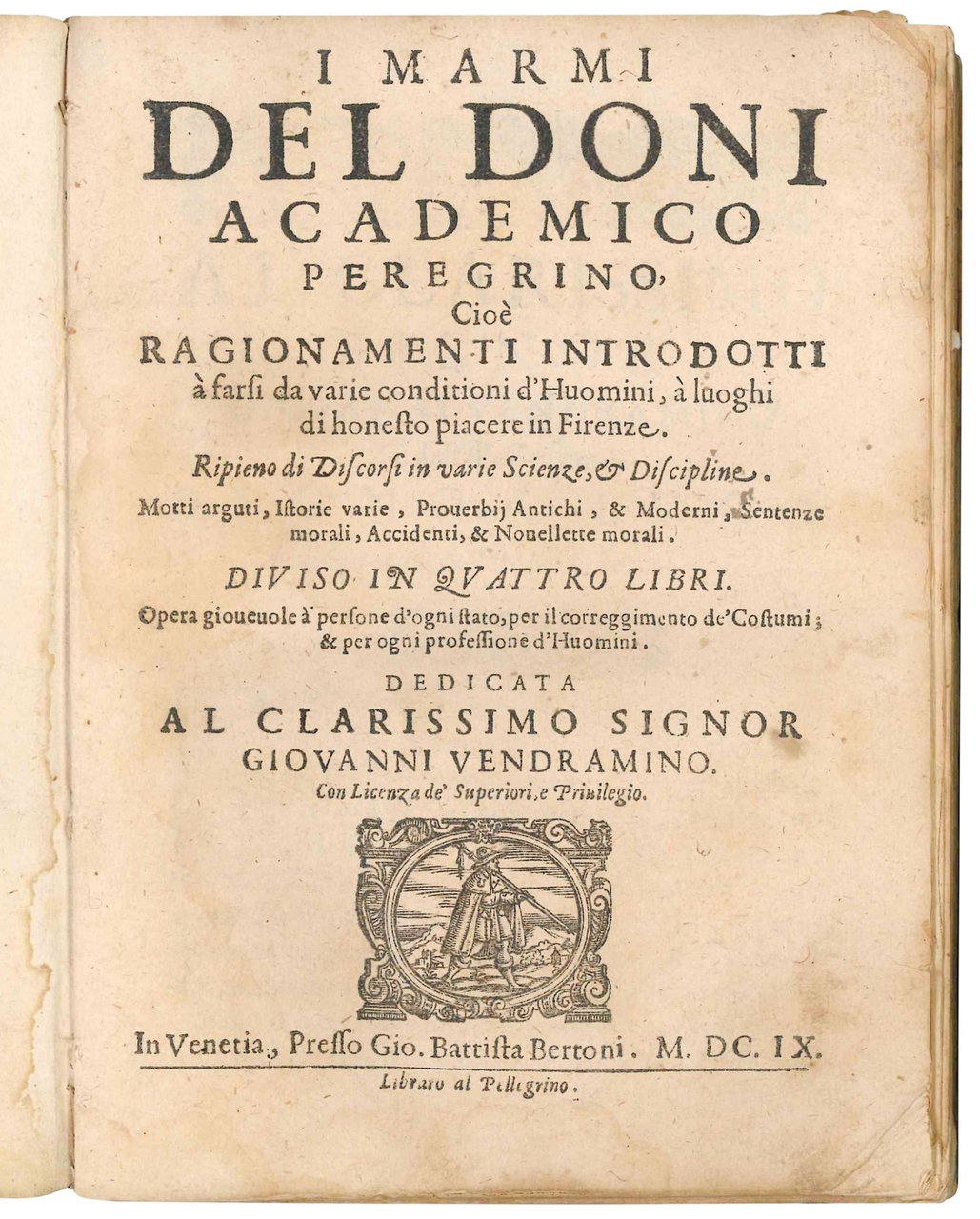
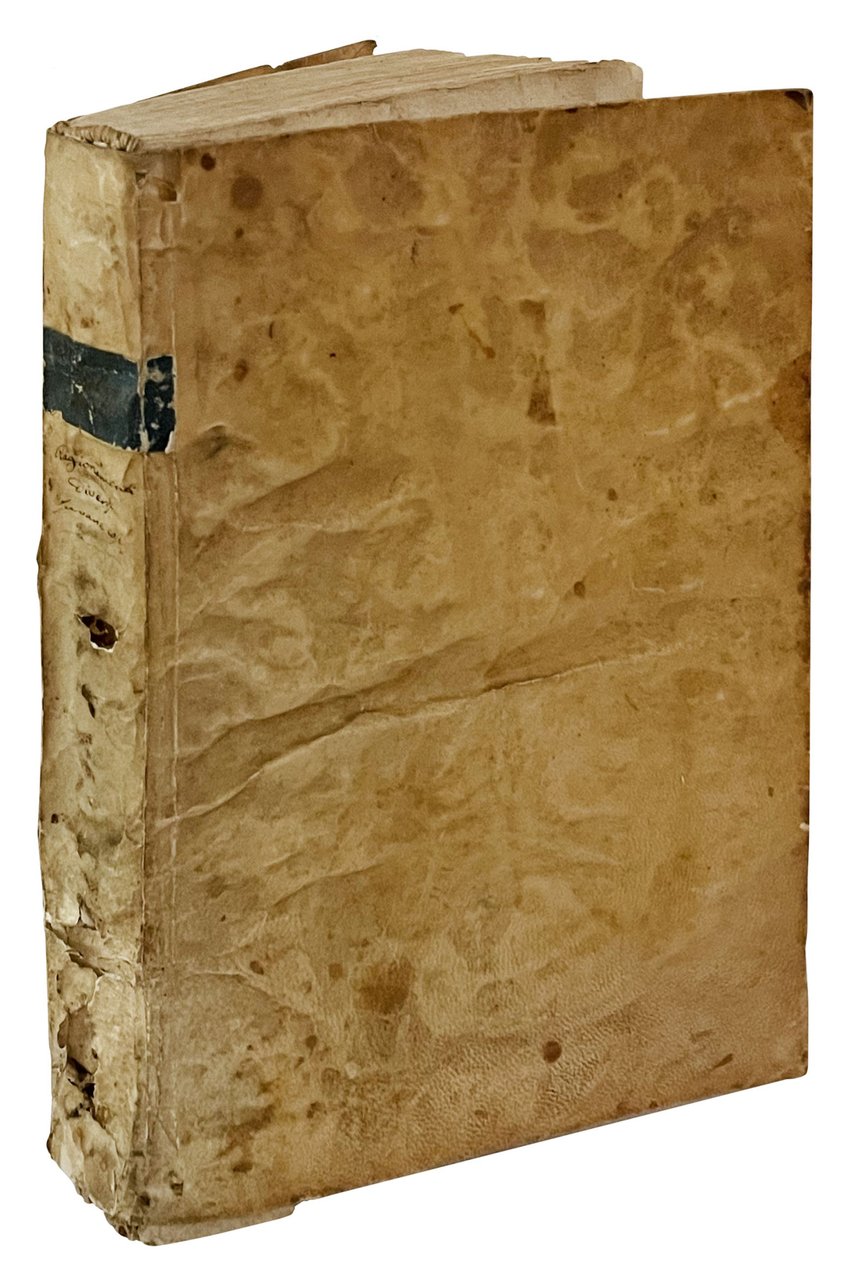
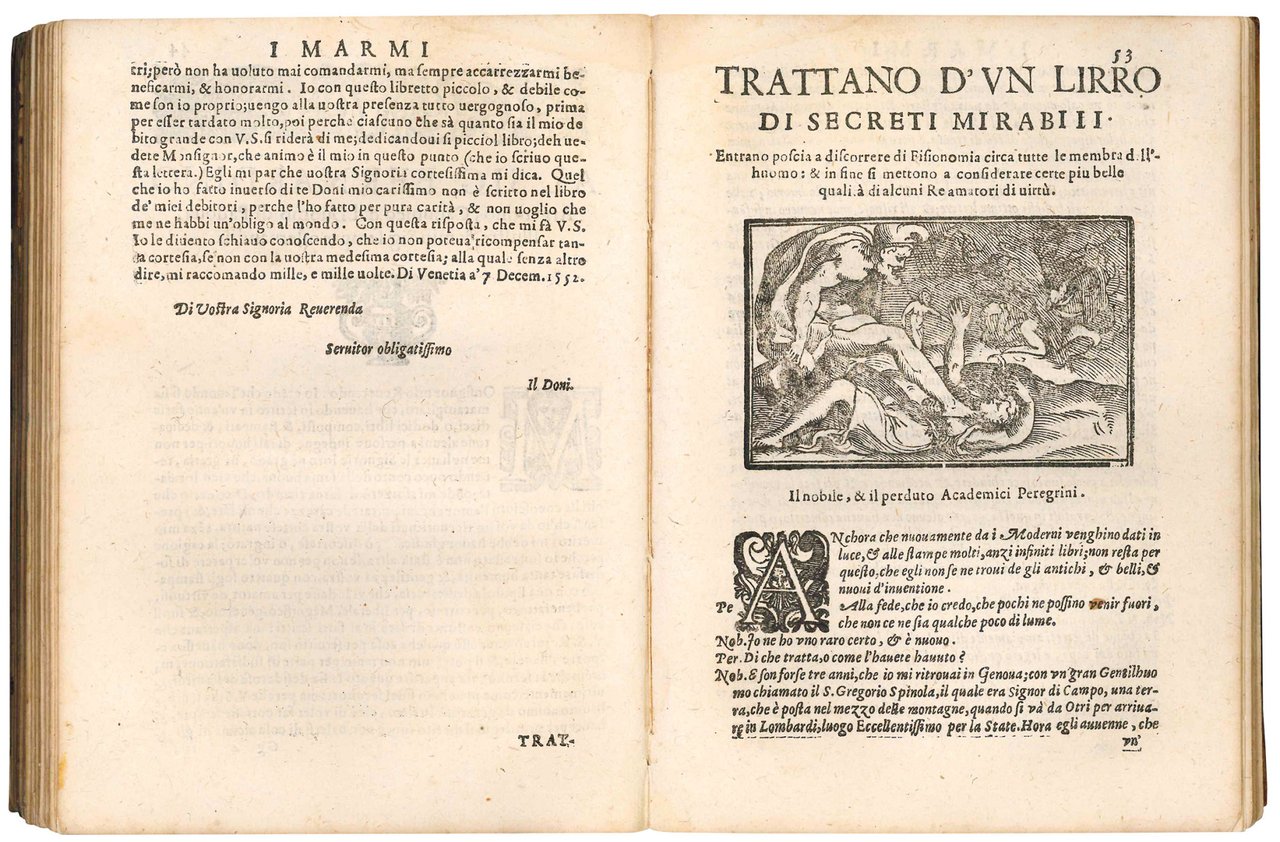
I marmi del Doni academico peregrino, cioè ragionamenti introdotti à farsi da varie conditioni d'huomini, à luoghi di honesto piacere in Firenze [...]. Diviso in quattro libri [...]
I marmi del Doni academico peregrino, cioè ragionamenti introdotti à farsi da varie conditioni d'huomini, à luoghi di honesto piacere in Firenze [...]. Diviso in quattro libri [...] | Libri antichi e moderni | DONI, Anton Francesco (1513 - 1574)
Metodi di Pagamento
- PayPal
- Carta di Credito
- Bonifico Bancario
- Pubblica amministrazione
- Carta del Docente
Dettagli
- Anno di pubblicazione
- 1609
- Luogo di stampa
- Venezia
- Autore
- DONI, Anton Francesco (1513 - 1574)
- Editori
- Giovanni Battista Bertoni
- Soggetto
- seicento
- Stato di conservazione
- Buono
- Lingue
- Italiano
- Legatura
- Rilegato
- Condizioni
- Usato
Descrizione
4to (198x145 mm). Collation: [pi]A⁴ *⁴ A-G⁸ H¹⁰, a-e⁸, Aa-Kk⁸ (leaf Ii4 incorrectly signed 'I4', leaf Kk8 is a blank). [8], 66, 40, 81, [1] leaves. Four parts in one volume, each with separate title page (parts 3 and 4 have continuous pagination and register), with frequent errors in foliation but complete. With woodcut printer's device on the title-pages, several woodcut vignettes, woodcut head- and tail-pieces and ornamental initials. Original limp vellum with manuscript title on the spine (spine worn, panels slightly soiled). Occasionally stained, marginal tear to l. A8. Otherwise, a good and genuine copy.
Second edition, dedicated by the editor to Giovanni Vedramino, of this curious work by Anton Francesco Doni (first edition: Venice, Marcolini, 1552-1553). It is a collection of a great variety of texts consisting mostly of a series of imaginary dialogues involving over one hundred different characters, some real, some fictive, who are portrayed conversing on the marble steps (I marmi) of the Duomo of Florence on a wide range of unrelated topics. The many aspects (editorial, iconographic, musical, etc.) of the work are meticulously investigated by G. Rizzarelli (‘I Marmi' di Anton Francesco Doni: la storia, i generi e le arti, Florence, 2012, passim).
“Anton Francesco Doni went beyond Franco, Domenichi, and Lando in his rejection of Cinquecento learning. The others believed that learning had declined and attacked individual humanists, but Doni argued that the studi liberali were fundamentally inadequate to teach men virtue [...] His I Marmi (1552-1553), or conversations overheard in the evening on the marble steps of the Florentine cathedral, contains a dialogue in which he rejects the studi liberali. A poultry vendor, a broker, and an unidentified third person begin to discuss how to avoid vice and to foster virtue, defined the traditional terms as the love of patria, wife, and children. But the studi liberali cannot teach virtue [...] Grammar can teach style and poetry is important; history is ‘noble', but knowledge of the lives and activities of the ancients has only a negative value, a warning to men to avoid their faults. With arithmetic and geometry one can count one's possessions, but it is of no avail if one does not divide them for charity. Neither is virtue the result of the study of Stoic or Aristotelian philosophy. Books cannot teach men virtue because men have to learn from their own experience [...]” (P. Grendler, The Rejection of Learning in Mid-Cinquecento Italy, in: “Culture and Censorship in Late Renaissance Italy and France”, London, 1981, pp. 243-244).
A noteworthy passage important for the history of the reception of the Copernican theory in the 16th century occurs in the first dialogue: the ‘buffo' Carafulla defends the heliocentric system just nine years after the publication of Copernicus' De revolutionibus: “Il sole non già, noi giramo; la terra è quella che si volge, non sai tu che il cielo si chiama fermamento; & quando costa vanno a torno alla terra e dicono io ho girato tutta la cosmographia” (I, p.18) (cf. M. R. Macchia, Le voci della scienza nei ‘Marmi' di Anton Francesco Doni: la divulgazione scientifica fra oralità e scrittura, in: “Lo scaffale della biblioteca scientifica in volgare, secoli XIII-XVI: atti del Convegno, Matera, 14-15 ottobre 2004”, R. Librandi & R. Piro, eds., Florence, 2006, pp. 469-484).
Anton Francesco Doni was born in Florence, the son of a scissors-maker and second hand dealer. The first extant reliable information on him is that after 1535 he joined the religious order of the Servi di Maria in the Florentine convent of the Santissima Annunziata, taking the name of brother Valerio. During his stay there Doni became a friend of the sculptor Giovannangelo Montorsoli, a disciple of Michelangelo. In 1540 they both left Florence and the convent and moved to Genoa; the following year Doni transferred to Alessandria, where he stayed with Antonio Trotti and Isabella Gu