C.Cor. Taciti quæ extant Opera Ex recensione I. Lipsii
C.Cor. Taciti quæ extant Opera Ex recensione I. Lipsii | Libri antichi e moderni | TACITUS, Publius Cornelius (ca. 56–120 CE)-LIPSIUS, Justus,
C.Cor. Taciti quæ extant Opera Ex recensione I. Lipsii
C.Cor. Taciti quæ extant Opera Ex recensione I. Lipsii | Libri antichi e moderni | TACITUS, Publius Cornelius (ca. 56–120 CE)-LIPSIUS, Justus,
Metodi di Pagamento
- PayPal
- Carta di Credito
- Bonifico Bancario
- Pubblica amministrazione
- Carta del Docente
Dettagli
- Anno di pubblicazione
- 1621
- Luogo di stampa
- Lugd. Batavorum (Leiden)
- Autore
- TACITUS, Publius Cornelius (ca. 56–120 CE)-LIPSIUS, Justus,
- Editori
- Ex officina Elzviriana
- Soggetto
- seicento
- Stato di conservazione
- Buono
- Lingue
- Italiano
- Legatura
- Rilegato
- Condizioni
- Usato
Descrizione
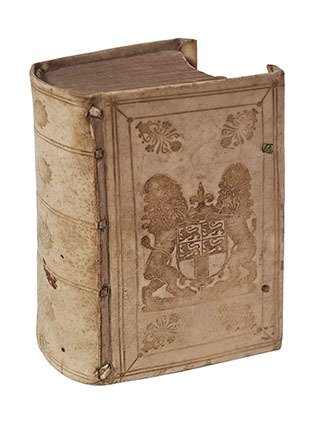
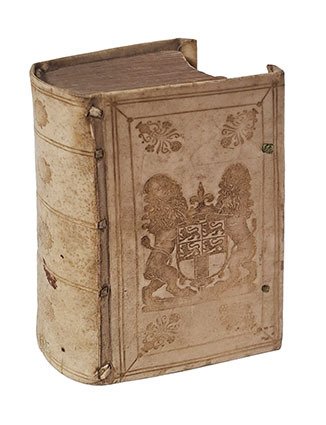
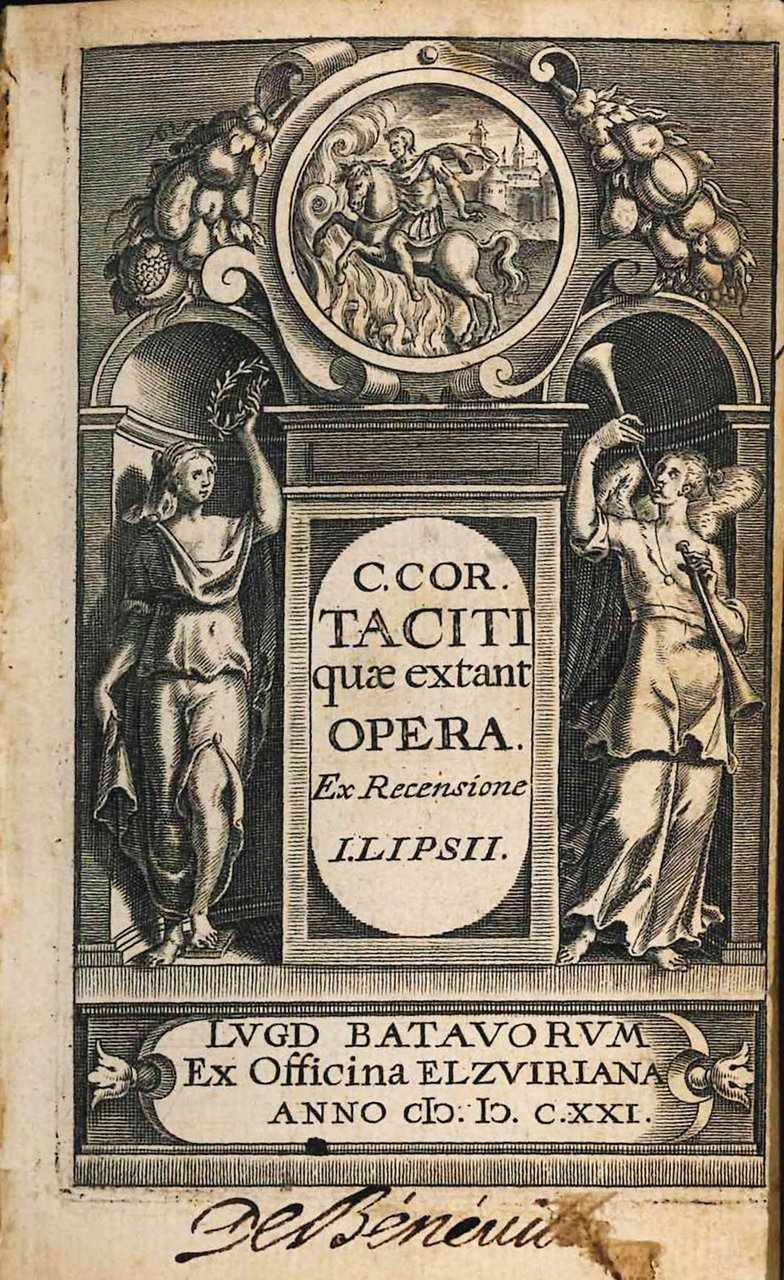
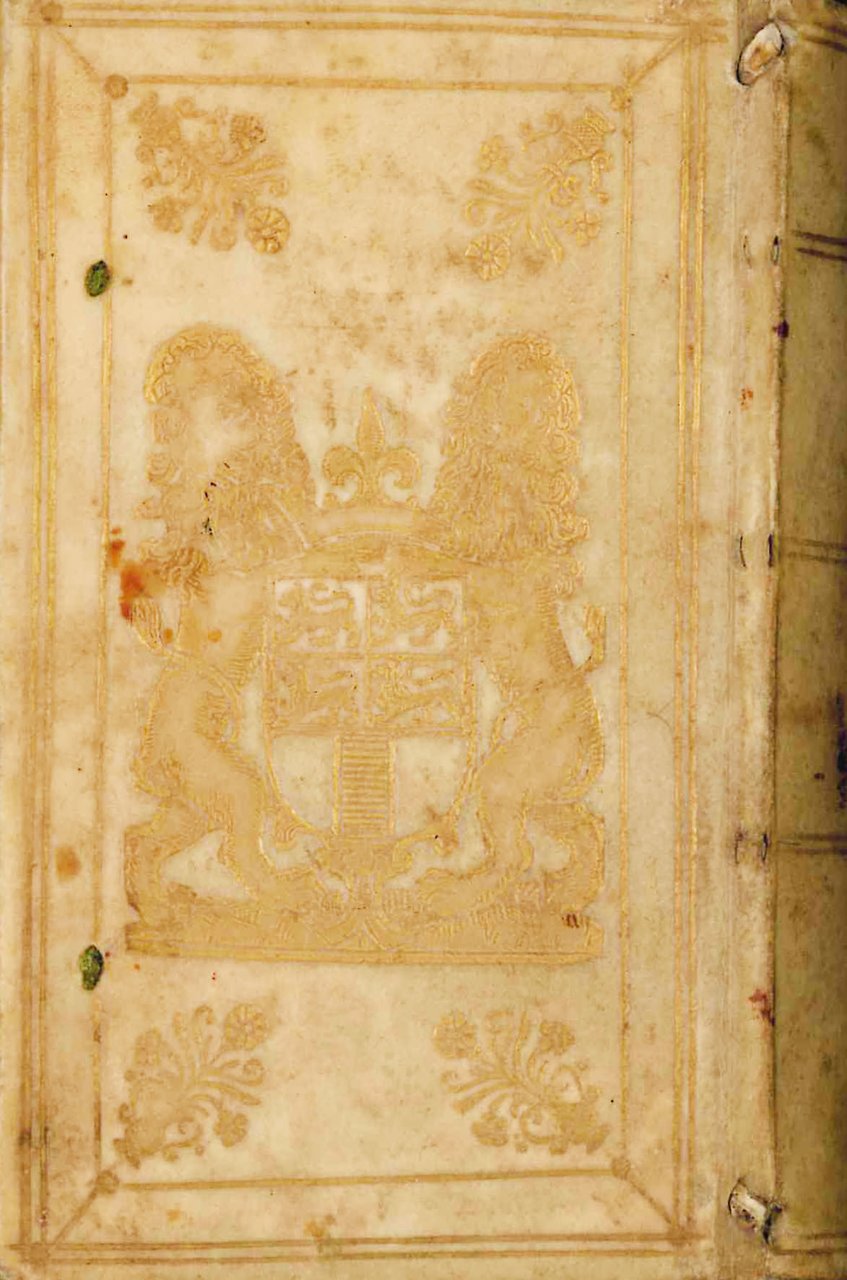
8vo (130 x 75 mm). 787, [29] pp. Collation: A-Z⁸ Aa- Zz⁸ Aaa-Zzz⁸. Pagination error. Contemporary stiff vellum, enriched by two gilt concentric frames and a bipartite shield bearing four lions passant at the head, flanked by a pair of lions rampant, a coat-of -arms attributable to the city of Rotterdam, where the production of premium bindings was divided between the workshops of the Bloemenvaas group and Hertenbinderji (traces of two green fabric laces, common choice at that time in order to contrast with the monochrome cover material), smooth spine with four gilt ornamental flowers. Ink stain on two pages, otherwise a very good copy. Engraved title page (statues of angel and goddess with laurel crown and man riding a horse) with a manuscript ownership entry "De Bénéville". Hand-written ownership entries on title-page verso, including: "Ex libris francisci stephani Bacon [?] Rhetorices professoris in collegio falesiensi [?]". On the front flyleaf manuscript notes of the bookseller Giuseppe Martini (1870-1944; "During the most memorable years of the antiques trade, especially between 1920 and 1930," writes the italian author Giancarlo Petrella in The Sun , "the great organizers of the most solemn sales eagerly awaited the arrival of Giuseppe Martini. If he was there, success was guaranteed. And he was there, almost always. He arrived with his good-natured, distracted air, his jacket dangling and his pockets bulging with books. You could hear him, as he browsed the books, skewering from memory the dynasties of printers and shelves of incunabula; reciting without error the numbers of signatures, printing dates, and sacramental formulas of explicit." Martini began his career as an expert in antique books in Lucca, but then moved first to New York and finally to Lugano).
The collection includes:
- Iusti Lipsi postremus de Tacito eiusque utilitate iudicium (Justus Lipsius was one of the most influential intellectuals of the late Renaissance, known for his role in reviving and reshaping Stoicism for an early modern audience. Born in Overijse, in the Spanish Netherlands, he was educated by Jesuits and developed an early mastery of classical Latin, which became the foundation of his scholarly career. Lipsius held academic positions at major European universities, including Leuven and Leiden, where he gained a reputation as a leading humanist philologist. His work is characterized by a deep engagement with classical Roman authors like Tacitus and Seneca, however unlike purely antiquarian scholars, Lipsius aimed to make ancient thought relevant to contemporary issues, particularly the political instability and religious conflicts of his time.)
- Ab excessu Divi Augusti Annalium (book I-VI and XI-XVI)
- Ab excessu Neroni Historia (book I-V)
- De situ, moralibus et populis germaniae libellus
- Iulii Agricolae vita
- Fabii Quinctiliani, ut videtur, dialogus an sui saecli oratores antiquis et quare concedant C. Cornelio Tacito vulgo inscriptus
Tacitus was one of the most important historians of ancient Rome, as well as a senator and public official who lived under the Flavian and early Antonine emperors. His political career—culminating in the consulship in 97 CE—gave him direct insight into the workings of imperial power, which profoundly shaped his historical writing. Tacitus is best known for his major works, the Annals and the Histories, where he reconstructs the history of the Roman Empire from the death of Augustus through the tumultuous Year of the Four Emperors and into the Flavian period. Alongside these, he wrote shorter but highly influential texts such as the Germania, an account of the customs of the Germanic peoples, and the Agricola, a biography of his father-in-law that also serves as a reflection on Roman rule in Britain. His historiography is marked by a dense, epigrammatic style, rich in rhetorical compression and moral nuance. Tacitus is less concerned with providing a neutral chronicle than with uncovering the ethical