Architecture Moderne ou L'Art de bien Bâtir pour toutes sortes de personnes tant pour les maisons des particuliers que pour le palais [...]
Architecture Moderne ou L'Art de bien Bâtir pour toutes sortes de personnes tant pour les maisons des particuliers que pour le palais [...] | Libri antichi e moderni | BRISEUX, Charles Etienne (1680-1754)
Architecture Moderne ou L'Art de bien Bâtir pour toutes sortes de personnes tant pour les maisons des particuliers que pour le palais [...]
Architecture Moderne ou L'Art de bien Bâtir pour toutes sortes de personnes tant pour les maisons des particuliers que pour le palais [...] | Libri antichi e moderni | BRISEUX, Charles Etienne (1680-1754)
Metodi di Pagamento
- PayPal
- Carta di Credito
- Bonifico Bancario
- Pubblica amministrazione
- Carta del Docente
Dettagli
- Anno di pubblicazione
- 1728
- Luogo di stampa
- Paris
- Autore
- BRISEUX, Charles Etienne (1680-1754)
- Editori
- Chez Claude Jombert, ruë S. Jacques
- Soggetto
- settecento
- Stato di conservazione
- Buono
- Lingue
- Italiano
- Legatura
- Rilegato
- Condizioni
- Usato
Descrizione
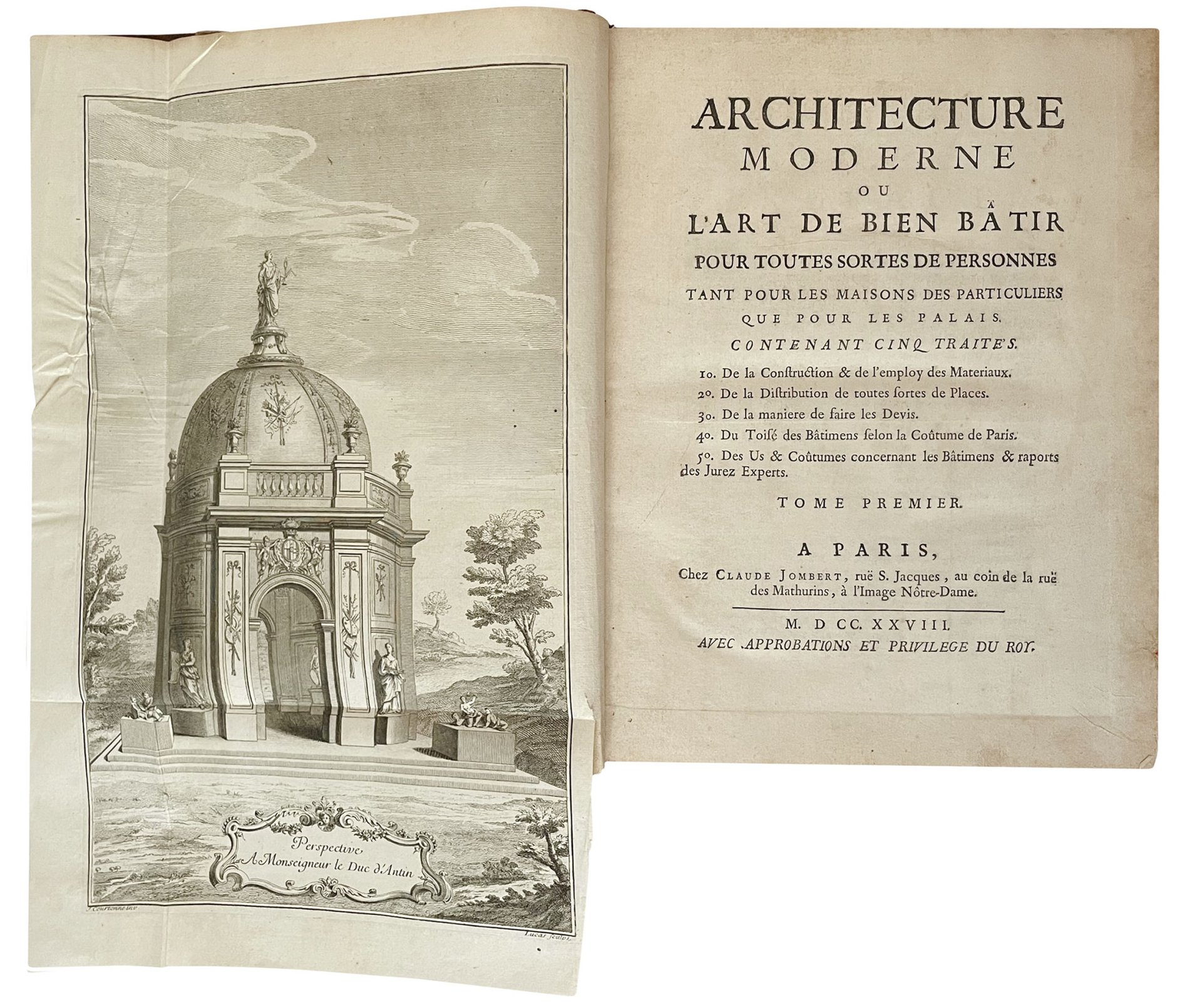
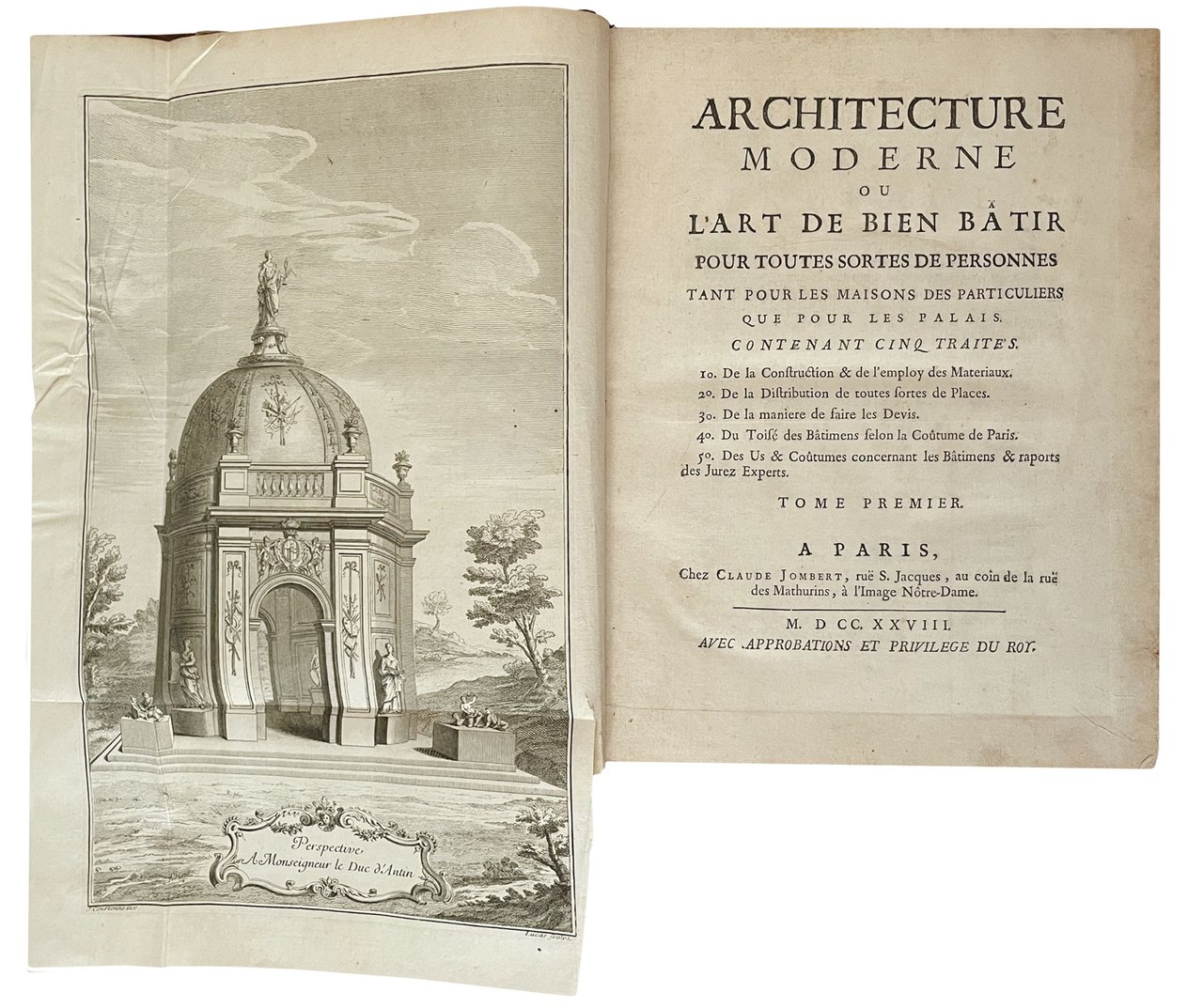
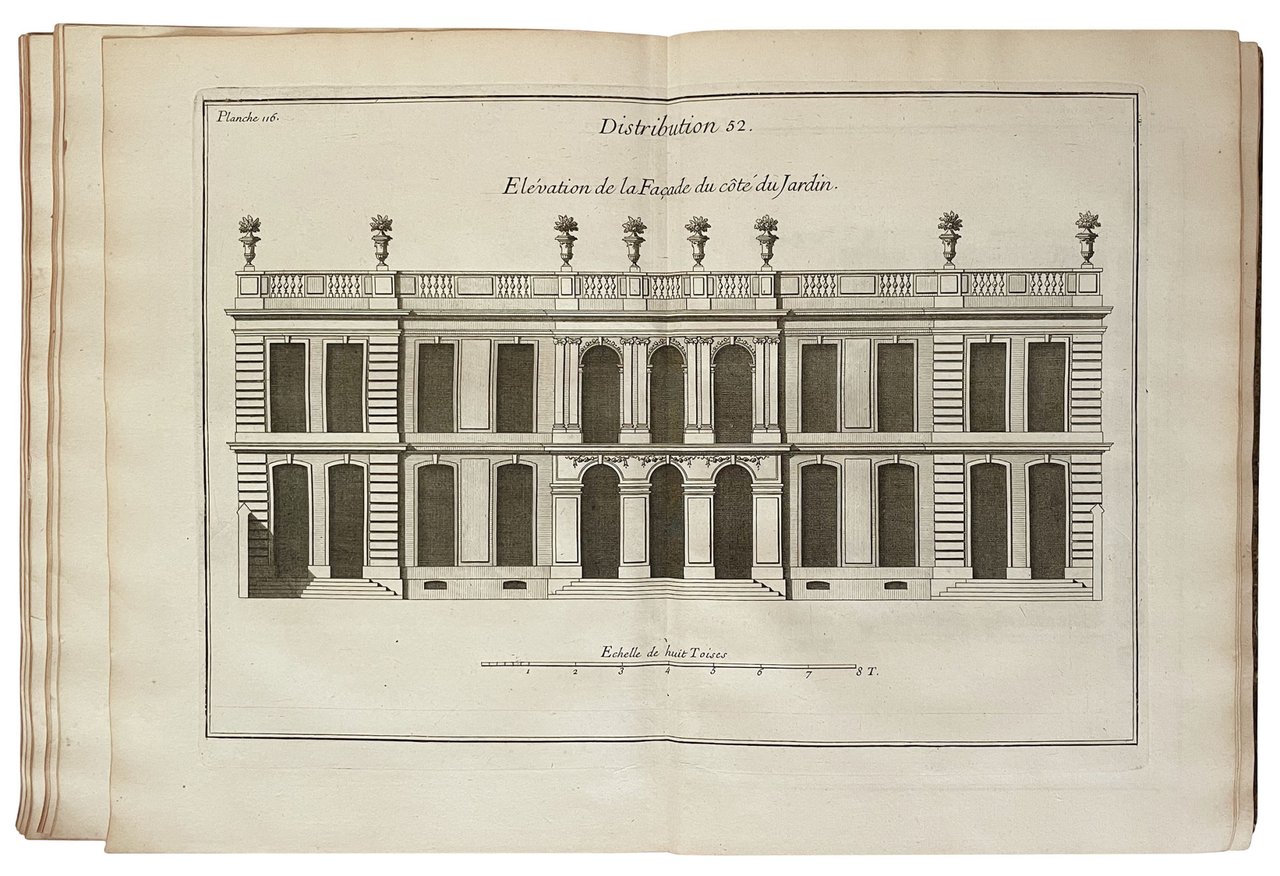
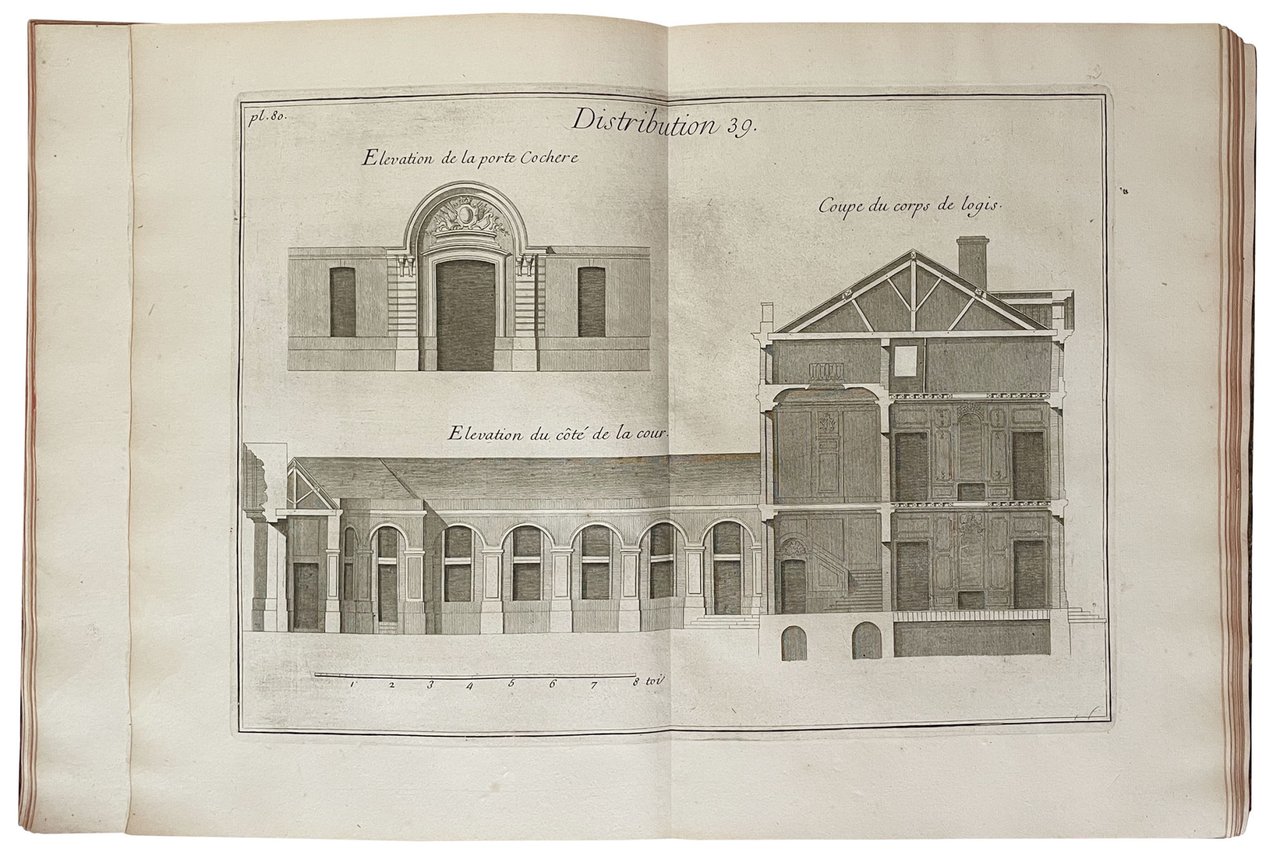
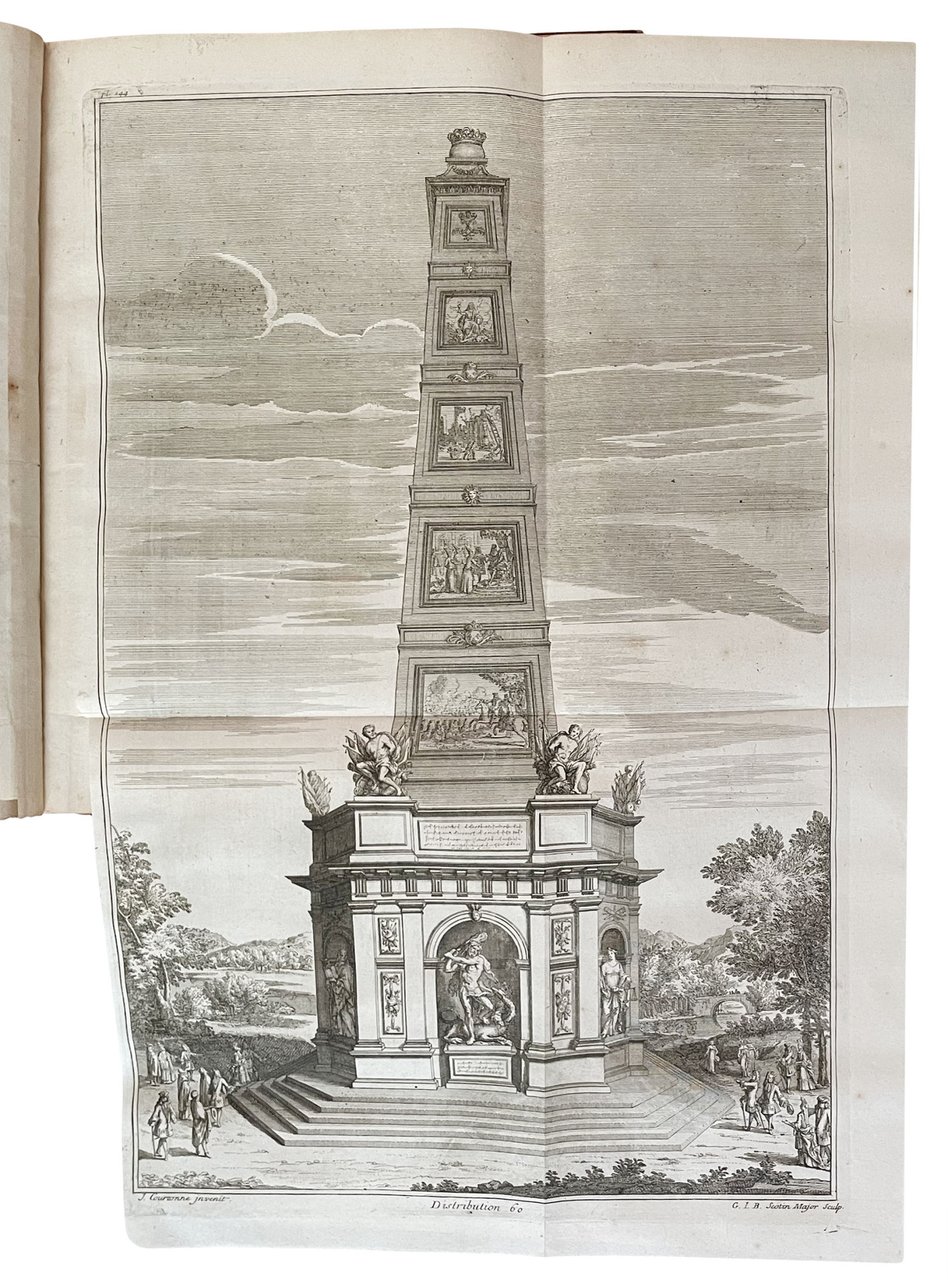
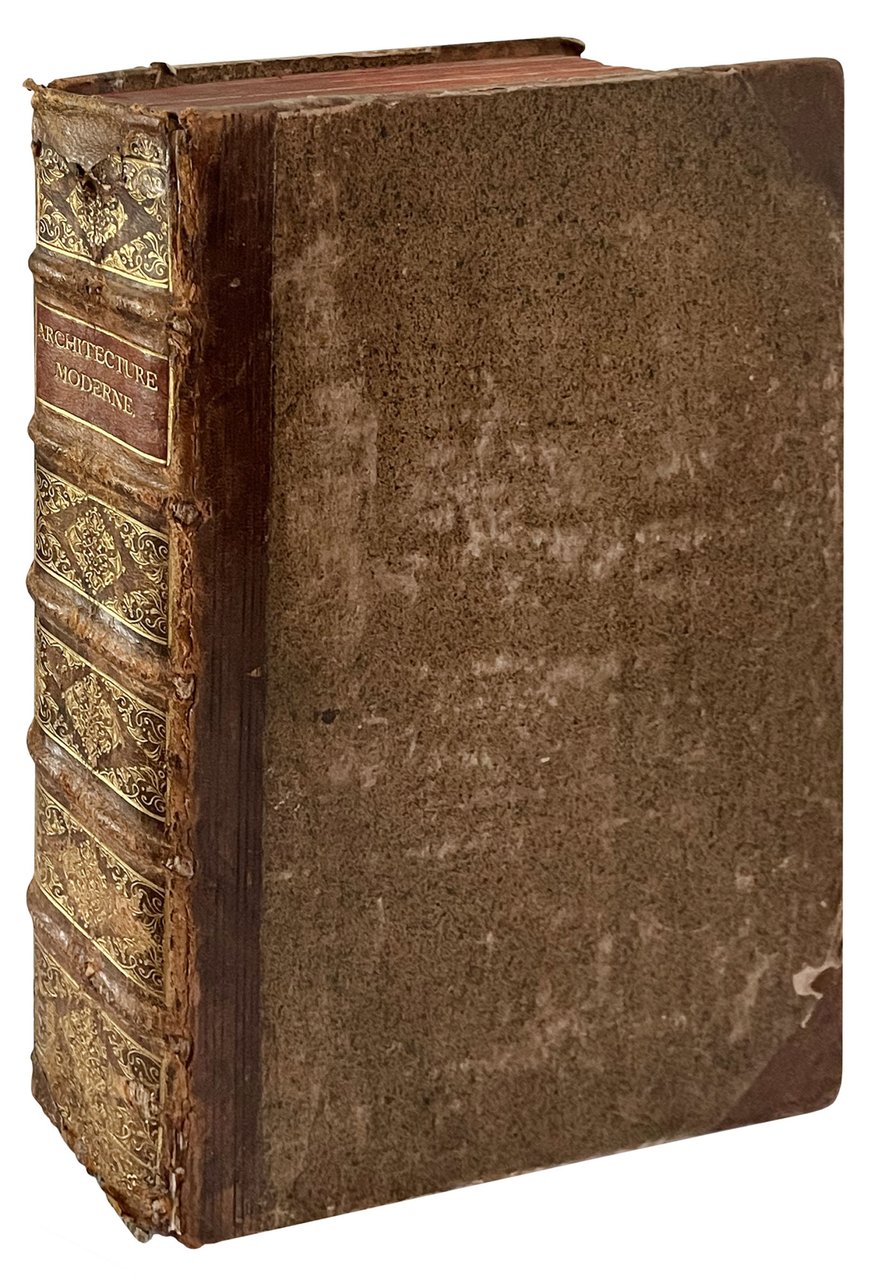
Two parts in one volume, 4to (280x215 mm). [8], 96; 59, [2]; 44, 60 ;74, [2] pp. with [6] engraved plates in volume one (including the frontispiece) and [144] engraved plates in volume two (many folding). Collation: a⁴ A-M⁴ A⁴-H² A⁴-F² A⁴-K². The authorship of the work is alternatively attributed to Briseux alone, to Briseaux and Jean Courtonne (Thieme Becker), or to Courtonne alone (Cicognara 482). In volume 2, the unsigned plates 1-130 are by G. Tiercelet; 131-144 are signed by J. Courtonne as designer. Frontispiece engraved by Claude Lucas in vol. 1; engraved frontispiece added in vol. 2. Woodcut historiated initials, head - and tail-pieces (some of them signed: "Papillon inv et fecit"). Contemporary half-calf, richly gilt spine with raised bands and morocco lettering piece, red edges (worn and rubbed, top of the spine repaired, bottom of the spine damaged). Occasionally slightly browned, but overall a good, genuine copy.
First edition. Attributed primarily to the French architect, mathematician and theorist Charles-Étienne Briseux, and with significant contributions from the publisher Claude Jombert, Architecture Moderne is a substantial two-volume treatise representing a deliberate ideological departure from the classical orthodoxy that had dominated European architecture since the Renaissance. It redirects the focus of architectural theory away from the aesthetic of state propaganda and the sun king, and onto the realities of urban and rural life in the early Enlightenment. The book's ultimate objective is encapsulated in its subtitle: to democratise the sophisticated art of structural design and elegant construction, making it accessible and practical 'for all kinds of people', from the emerging haute bourgeoisie and financial elites to modest landowners. The volume is divided into five sections: De la construction & de l'employ des materiaux; De la distribution de toutes sortes de places; De la maniere de faire les devis; Du toisé des bâtimens selon la coûtume de Paris; Des us & coûtumes concernant les bâtimens & rapports des jurez expert.
The overarching theme of the treatise is the elevation of commodité (the French concept of domestic comfort, spatial efficiency and interior convenience) to a status equal to or even greater than the traditional classical virtues of soliditas and venustas. With mathematical precision, the author argues that a building cannot be considered successful if its occupants are uncomfortable, regardless of how perfectly its exterior matches the ancient Greek or Roman orders. Volume One serves as a comprehensive theoretical and technical manual, systematically covering topics ranging from the chemical composition of various mortars in unstable soils to advanced roofing techniques, carpentry, and stonemasonry. Volume Two shifts focus to an unprecedented catalogue of architectural typologies, presenting a vast array of scalable floor plans, elevations and cross-sections for townhouses and country estates. In order to legitimise this modern, pragmatic approach without completely severing ties with classical tradition, the text engages in a sophisticated intellectual dialogue with an illustrious lineage of European theorists. The author has a great deal of respect for the academic foundations laid by François Blondel, the first director of the Académie Royale d'Architecture, particularly with regard to the mathematics of architectural proportion. However, he refines and updates the practical urban building methodologies established by Pierre Bullet in Architecture Pratique (1691), adapting them to the 18th-century Parisian market. The american architectural historian Dora Wiebenson (1926 - 2019) describes Architecture Moderne as a "water-shed publication, bridging sixteenth and seventeenth century building methods and designs from the simple to rococo models".
"The Architecture moderne, on the planning and contruction of domestic architecture, marks a watershed between sixteenth- an