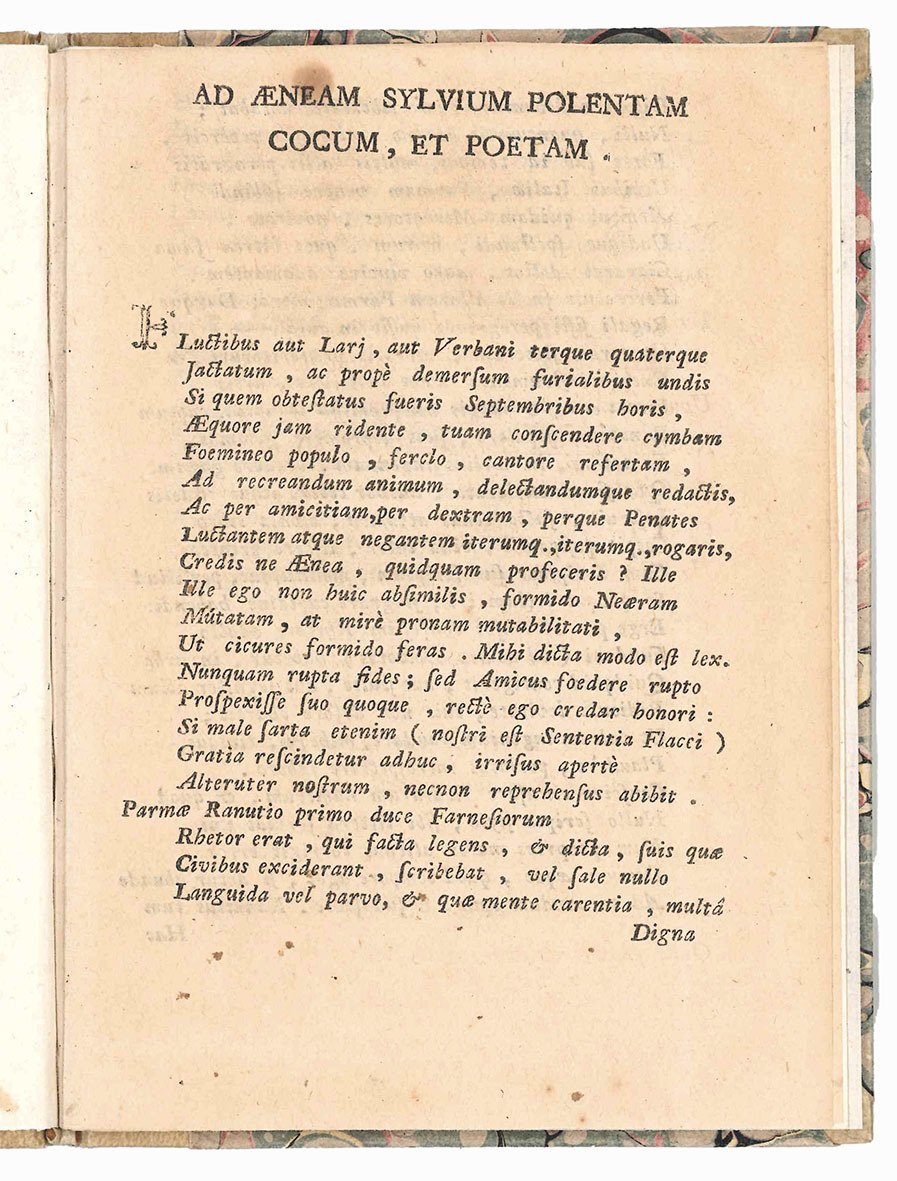
Ad Aenam Sylvium Polentam, cocum, et poetam. Incipit: "Fluctibus aut Larj, aut Verbani terque quaterque / Jactatum, […]". N.pl., n.pr., n.d. [Northern Italy (Parma?), ca. 1650]
Ad Aenam Sylvium Polentam, cocum, et poetam. Incipit: "Fluctibus aut Larj, aut Verbani terque quaterque / Jactatum, […]". N.pl., n.pr., n.d. [Northern Italy (Parma?), ca. 1650] | Libri antichi e moderni | CORIO, Girolamo (d. 1651) attr. to
Ad Aenam Sylvium Polentam, cocum, et poetam. Incipit: "Fluctibus aut Larj, aut Verbani terque quaterque / Jactatum, […]". N.pl., n.pr., n.d. [Northern Italy (Parma?), ca. 1650]
Ad Aenam Sylvium Polentam, cocum, et poetam. Incipit: "Fluctibus aut Larj, aut Verbani terque quaterque / Jactatum, […]". N.pl., n.pr., n.d. [Northern Italy (Parma?), ca. 1650] | Libri antichi e moderni | CORIO, Girolamo (d. 1651) attr. to
Metodi di Pagamento
- PayPal
- Carta di Credito
- Bonifico Bancario
- Pubblica amministrazione
- Carta del Docente
Dettagli
- Anno di pubblicazione
- 1650 ca.
- Luogo di stampa
- [Parma ?]
- Autore
- CORIO, Girolamo (d. 1651) attr. to
- Soggetto
- seicento
- Stato di conservazione
- Buono
- Lingue
- Italiano
- Legatura
- Rilegato
- Condizioni
- Usato
Descrizione
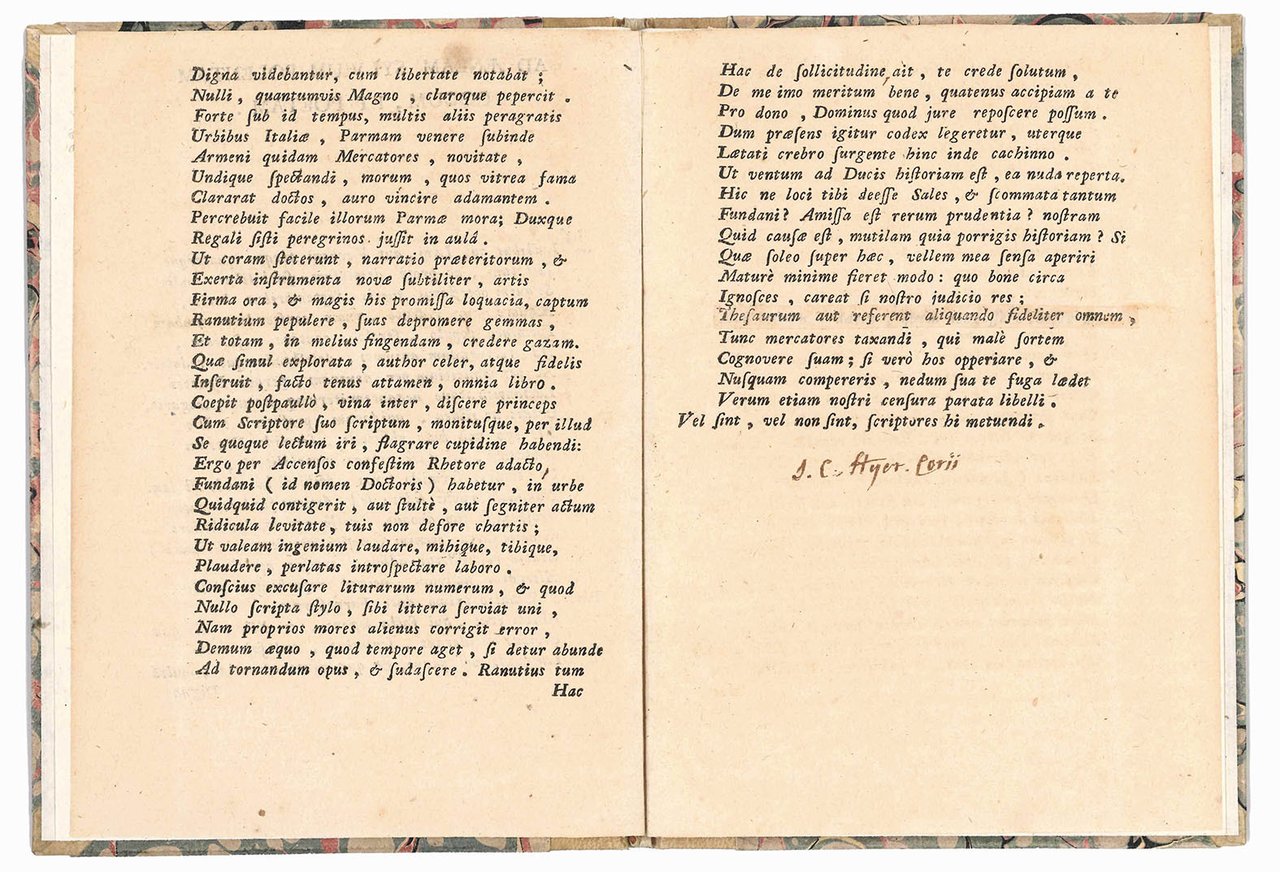
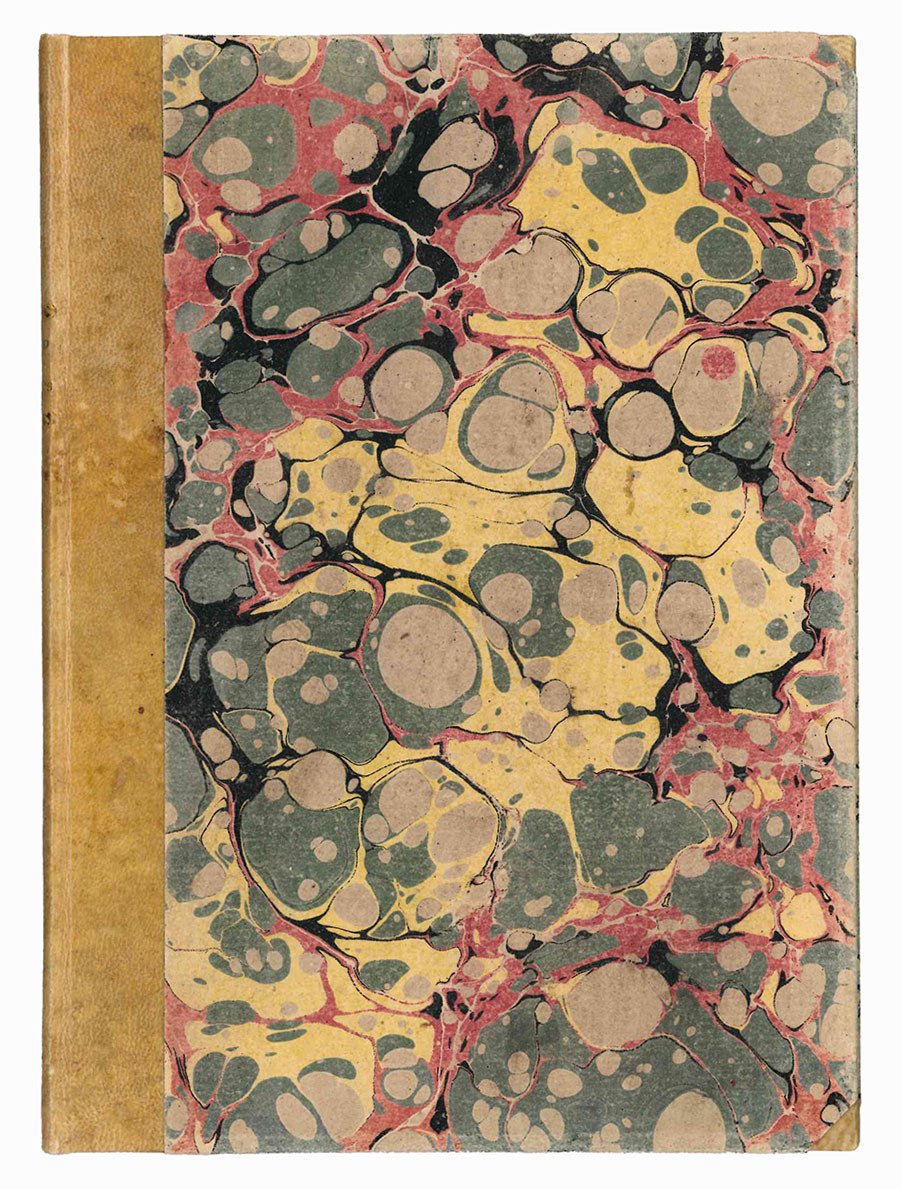
Bifolium (191x137 mm) printed on the first three pages, the last page being a blank. Correcting strip pasted on a line of p. [3]. At the end of the poem is the manuscript note “J.C. Hyer. Corii”. Bound in modern quarter vellum with gilt title on spine. Some pale browning and light foxing.
Unknown neo-Latin poem of 69 verses, addressed to a friend named Enea Silvio Polenta, cook and poet, by the anonymous author, probably identifiable with Girolamo Corio (or Coiro), who was appointed as Bishop of Parma on 2 May 1650 and served until his death on 26 July 1651.
The poem recounts a scam carried out against Ranuccio I Farnese, the Duke of Parma, by Armenian merchants who presented themselves at court as expert jewellers. They were so persuasive in their account of their skills that the duke unwisely entrusted his gems to them to be set, and they fled with the treasure. Later, the duke happened to read with great satisfaction the chronicle written by a local rhetorician who had recorded all the events that had taken place in Parma during Ranuccio's reign. However, when he reached the account of the treasure scam, he realised that the narrative had become sparse and he complained about this to the rhetorician. Essentially, Corio - if he is indeed the author - uses the anecdote as an “exemplum” to emphasise the need for intellectual honesty, consistency and freedom from double standards in writing. This is clearly a satirical piece written for a specific occasion and likely circulated in Parma among the local academies and perhaps even at court.
This edition appears to be unrecorded, and we could not find the poem anywhere else.