Questo sito usa cookie di analytics per raccogliere dati in forma aggregata e cookie di terze parti per migliorare l'esperienza utente.
Leggi l'Informativa Cookie Policy completa.

Sei in possesso di una Carta del Docente o di un Buono 18App? Scopri come usarli su Maremagnum!

Libri antichi e moderni

David D'Avray, : Adolf Lippold

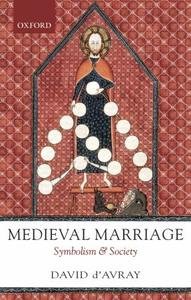
Medieval Marriage. Symbolism & Society

Oxford University Press 2007,

45,09 €

Medievale Libreria

(Pavia, Italia)

Parla con il Libraio

Metodi di Pagamento

Dettagli

ISBN
9780199239788
Autore
David D'Avray
Editori
Oxford University Press 2007
Curatore
: Adolf Lippold
Soggetto
Amore e sessualità-Matrimonio

Descrizione

336 pages. Paperback. cm 13,8 x 21,6. Publisher's description: - Deals with the nature of the western marriage tradition at a formative period. - Examines the medieval period in the whole of Europe, using a wide range of sources. - Expands the source base for the history of medieval marriage. This study shows how marriage symbolism emerged from the world of texts to become a social force affecting ordinary people. It covers the whole medieval period but identifies the decades around 1200 as decisive. New arguments for regarding preaching as a mass medium from the thirteenth century are presented, building on the author's Medieval Marriage Sermons. In marriage preaching symbolism was central. Marriage symbolism also became a social force through law, and lay behind the combination of monogamy and indissolubility which made the medieval Church's marriage system a unique development in world history. Symbolism is not presented as an explanation on its own: it interacted with other causal factors, notably the eleventh-century Gregorian Reform's drive for celibacy, which made the higher clergy like a third gender and less sympathetic to patriarchal polygamous tendencies. Sexual intercourse as a symbol of Christ's union with the Church became central, not just in mysticism but in society as structured by Church law. Symbolism also explains apparently bizarre rules, such as the exemption from capital punishment of clerics in minor orders provided that they married a virgin not a widow. The rules about blessing second marriages are also connected with this nexus of thought. The book is based on a wide range of manuscript sources: sermons, canon law commentaries, Apostolic Penitentiary registers, papal bulls, a gaol delivery roll, and pastoral handbooks. The collection of documents at the end of the book expands the source base for the history of medieval marriage generally as well as underpinning the thesis about symbolism.
Logo Maremagnum it