Landholding and Land Transfer in the North Sea Area (Late Middle Ages - 19th Century),
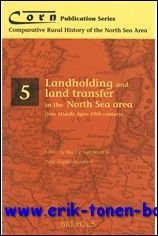
Landholding and Land Transfer in the North Sea Area (Late Middle Ages - 19th Century),
Metodi di Pagamento
- PayPal
- Carta di Credito
- Bonifico Bancario
- Pubblica amministrazione
- Carta del Docente
Dettagli
- Autore
- P. Hoppenbrouwers, B. Van Bavel (Eds.)
- Editori
- Turnhout, Brepols, 2004
- Soggetto
- Geschiedenis, History, Histoire, Geschichte
Descrizione
Paperback, 292 p., 156 x 234 mm. ISBN 9782503510972. For a better understanding of medieval and early modern rural society, in which land was the principal source of income and investment, as well as a most prestigious object of possession and a solid base of power, historical questions on landholding and land transfers are highly relevant. This volume aims to clarify some long-standing issues concerning the large variety of land tenure and non-familial transfers of land in the North Sea area by treating them from a regional - if possible comparative - perspective and by linking them to such structural features of preindustrial rural society as shifts in land to labour ratio's; social property relations; commercialisation and the rise of land, leasehold, and credit markets; the growth of state intervention and the institutional innovation that followed in its wake; the sustained prevalence of local or regional customary law; and the effects of social and cultural values on the demand for land. From viewing the later medieval and early modern period as a whole, one has to conclude that the mobility of agricultural land markedly increased. This was due first and foremost to the establishment of clear-cut private property rights, to the expansion of land and credit markets, and to the spread of short-term leasing. Differences in the pace of capitalist development as well as of state formation were mainly responsible for outspoken regional differences. Languages: English.
