Libri antichi e moderni
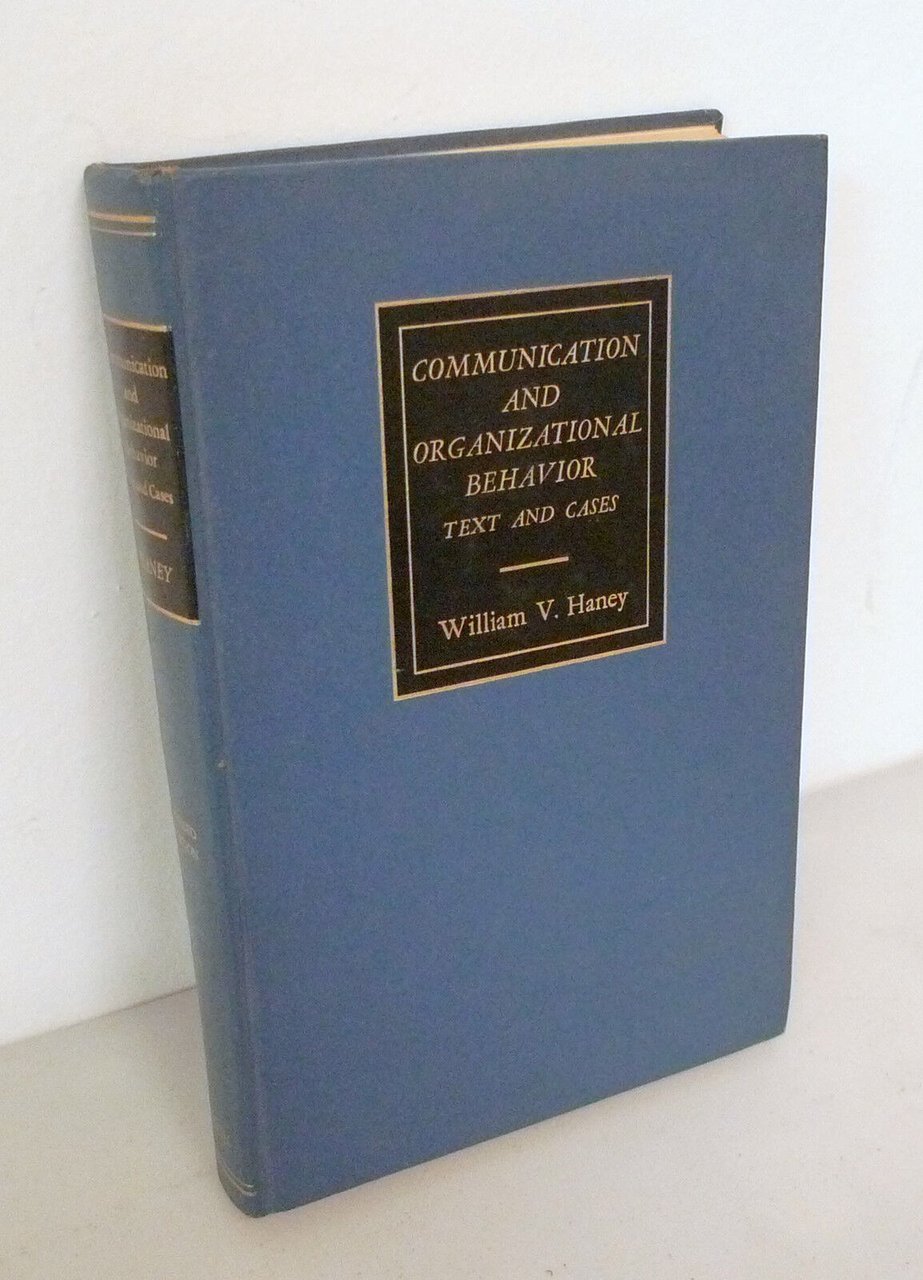
Haney,COMMUNICATION AND ORGANIZATIONAL BEHAVIOR,1967[management,comunicazioni
8,90 €
Modo Infoshop
(Bologna, Italia)
Le corrette spese di spedizione vengono calcolate una volta inserito l’indirizzo di spedizione durante la creazione dell’ordine. A discrezione del Venditore sono disponibili una o più modalità di consegna: Standard, Express, Economy, Ritiro in negozio.
Condizioni di spedizione della Libreria:
Per prodotti con prezzo superiore a 300€ è possibile richiedere un piano rateale a Maremagnum. È possibile effettuare il pagamento con Carta del Docente, 18App, Pubblica Amministrazione.
I tempi di evasione sono stimati in base ai tempi di spedizione della libreria e di consegna da parte del vettore. In caso di fermo doganale, si potrebbero verificare dei ritardi nella consegna. Gli eventuali oneri doganali sono a carico del destinatario.
Clicca per maggiori informazioniMetodi di Pagamento
- PayPal
- Carta di Credito
- Bonifico Bancario
-

-
 Scopri come utilizzare
il tuo bonus Carta del Docente -
 Scopri come utilizzare
il tuo bonus 18App
Dettagli
Descrizione
William V. Haney,
COMMUNICATION AND ORGANIZATIONAL BEHAVIOR.
TEXT AND CASES.
Richard D. Irwin, Inc., Homewood, Illinois, 1967,
revised edition,
copertina rigida, rilegatura in tela,
23,5x15,5 cm., pp.533,
alcune illustrazioni in bianco e nero,
The Irwin Series in Management,
consulting editor John F. Mee,
testo in inglese,
peso: g.860
cod.2732
CONDIZIONI DEL LIBRO: buone,
alcune sottolineature a penna
INDICE
PART I. COMMUNICATION AND ORGANIZATIONAL
BEHAVIOR
1. Introduction........................................................... 3
Plan of the Book. The Cases.
2. Organizational Climate and Communication.............................. 9
Trends. Supportive Climate: Trust and Performance. Breaking the Cycle.
A Reconciliation: Theory X. Hierarchy of Needs. Theory Y. Freedom-
Order “Dichotomy”: Integration of Goals. Vectors. Problems of Imple-
mentation.
Cases
Drexel Electronics Company............................................ 29
- East-Ohio Communications System....................................... 33
“My Case Against Paul Brown”.......................................... 39
Atlas Publishing Company.............................................. 41
Mayhall House......................................................... 46
PART II. THE BEHAVIORAL BASIS OF COMMUNICATION
3. Perception and Communication..........................................51
A Model of Perception: Differing Environments. Differing Stimuli. Differ-
ing Sensory Receptors. Differing Internal States. Differing Evoked Sets.
In Summation.[Defensiveness: Frame of Reference. On Coping with Defen-
siveness: Openness.
Article
I Active Listening..................................................... 81
Cases
On a Certain Blindness in Human Beings......................................... 98
The Cocktail Party.............................................................99
An Evening at the Leningrad Ballet.............................................101
Is This Man Mad?...............................................................106
Business Customs from Malaya to Murmansk.......................................108
4. Motivation and Communication....................................................119
A Motivation Model. Frustration: Conflict. Kinds of Needs: Primary and
Secondary Needs. Some Finer Delineations. The Value of Motivation
Theory. Epilogue
Cases
‘ The Accident................................................................140
Arno Annello, Machinist.....................................................141
The Crown Fastener Company ................................................144
“Vicious Rumor Tortures Garfield Ridge” ..................................148
5. The Process of Communication......................................... . 153
F Communication Process Model: Encoding. Transmission. Medium. Recep-
I. tion. Decoding. Encoding and Decoding—the Subtle Phases.
Article
Conditions of Success in Communication......................................169
---------PART III. PATTERNS OF MISCOMMUNICATION
6. The Inference-Observation Confusion...................................185
Observational and Inferential Statements. The Uncalculated Risk.
Correctives. Postscript.
Cases
56 Minutes before Pearl Harbor........................................199
Tyler Industries, Inc.................................................204
The Case of the Ledgers ............................................ 205
General Patton and the Sicilian Slapping Incidents....................207
The Man and the Desk..................................................213
7. Bypassing.............................................................215
Definition: Same Words—Different Things. Different Words—Same
Things. Some Consequences: The Range of Consequences. Immediate Con-
sequences. Two Fallacies: The Fallacy that Words Have Meanings. The
Fallacy that Words Have Mono-Usage. The Motives of Bypassers. Cor-
rectives: Be Person-Minded—Not Word-Minded. Query and Paraphrase.
Be Sensitive to Contexts. Summary.
Cases
Was There a Noise?........................................................239
The Product-Information Program............................................240
Ammons <v. Wilson & Co.....................................................242
Construction of a Sailplane................................................244
Jack McGuire...............................................................247
Room ..................................................................... 248
The Sturdy Corporate Homesteader...........................................250
8. Allness...................................................................253
Two False Assumptions. The Process of Abstracting. Problems of Allness
Reactions: Judging the Whole by Its Part. Intolerance of Other Viewpoints^
The “All Wall.” Correctives.
Cases
The Kiss and the Slap.............................................................264
Big Business—Pro and Con..........................................................264
Aldermanic Election............................................................. 270
Interview with Miss Winkler......................................................272
Intelligence Is for Commanders....................................................276
The Hayden Company................................................................278
9. Differentiation Failures I (Indiscrimination)...................................281
“Hardening of the Categories”: Stereotypes. The Battle of the Categories.
Language: A Contributing Factor. Correctives: Become Sensitive to
Differences. The Values of Seeing Similarities. Summary.
Cases
The Dixon Company.............................................................. 294
Full Circle.................................................................... 296
What’s Wrong with the Men?.........................* 297
Wright Cleaners and Dyers, Ltd..................................................297
The Wayland Company..............................................................300
On a Bus 302
The New Neighbor.................................................................303
10. Differentiation Failures II (Polarization).................................... 305
Definition: Contradictories. Contraries. Polarization. Consequences: De-
luding Ourselves. Deluding Others. The Pendulum Effect. Contributing
Factors: Similar Grammatical Form. Neglect of Middle Ground. Cor-
rectives: Detect the Contrary. Specify the Degree—Apply the How-Much
Index. Separate the Double Contraries.
Cases
Deadly Force.....................................................................319
Evans and Borne..................................................................320
The Student Answers..............................................................321
The Case of the Storage Shelves..................................................322
Two Factions.....................................................................323
11. Differentiation Failures III (The Frozen Evaluation) .... 327
The Case of Frank. The Assumption of Nonchange: Changes in People.
Changes in Business. The Influence of Language. Correctives: Accept the
Premise of Change. Apply the When Index.
Cases
Ordeal in London.................................................................341
Money Troubles...................................................................342
The “Good Old Days”..............................................................343
John Lundy.......................................................................344
Spring Wooing....................................................................346
12. Intensional Orientation I (A General Statement)..............................349
The Graham University Tax Case. Intension and Extension. Inten-
sionality: Some Manifestations. Correctives.
Cases
The Continental Electric Company..........................*...................357
The “Water-American”..................................................... * 359
“Get off Route 25, Young Man”.................................................360
The Trials of Galileo.........................................................362
The Hall-Barwell Letters (A)...............................................365
The Hall-Barwell Letters (B)...............................................367
The Hall-Barwell Letters (C)...............................................369
Negro-White Differences i . * 370
“They Don’t Do It Our Way” ..................................................371
Making Glamor Sell Glamor................................................... 375
The Star-Spangled Banner.....................................................376
13. Intensional Orientation II (“Pointing” and “Associating”) . . . 379
The “Pointing-Associating” Confusion: Euphemisms and Dysphemisms.
“Name Calling”: The Double Burden. Living up to the Labels. Living
down the Labels. “Associative” Bypassing: “Associative” Bypassing Becomes
Possible. A Possible Misunderstanding. Correctives: The “Pointing-
Associating” Confusion. “Name Calling.” “Associative” Bypassing.
Cases
Galvanized Sheets..............................................................395
Case of the Growing Boy..................................................... . 396
Seek to Change the Name of Cicero..............................................396
Sticks and Stones..............................................................397
The Manatee ..................................................................398
The Four Goals of Labor........................................................399
Name It a Name.....................................................................399
Prestige Foods .................................................................. 400
Flight from Scorn ............................................................403
McCall College.....................................................................404
14. Intensional Orientation III (Blindering)..........................................407
Some Consequences: Delayed Solutions. Undesirable Solutions. Correctives:
Remember, Defining = Neglecting. Does My Definition Blinder Me? How to
Recognize Our Blinders.
Cases
The Rawley Company....................................................................422
The Name of the Situation as Affecting Behavior........................; . . . 424
You Get What You Want.................................................................427
The Roberts Machine Company...........................................................431
Flies, Typhoid, and Publicity.........................................................435
IS. Undelayed Reactions.............................................437
Three Classes of Behavior: I. Reflex Responses. II. Voluntary Responses.
III. Reflexlike Responses. The Problem of Undelayed Reactions. Correc-
tives: Instantaneous Action—-Rarely Necessary. The Habit of Delay. Ad-
vance Preparation for Emergencies. Anticipate the Undelayed Responses of
Others. A Group Technique.
Cases
The Logan Company ..................................................447
The Mid-Western Telephone Company.......................................449
Air Judge’s Charge of Abuse by Police.................................451
“You Did That on Purpose!”..............................................454
Your Eyes Can Deceive You...............................................455
Torment in a Neighborhood............................................457
Dyer Public Relations, Inc. (II).....................................459
PART IV. OVERVIEW AND BIBLIOGRAPHY
16. Overview................................................................467
Introduction. Organizational Climate and Communication. Percep-
tion and Communication. Motivation and Communication. The Process
of Communication. Inference-Observation Confusion. Bypassing. Allness.
Differentiation Failures: I. Indiscrimination. II. Polarization. III. The
Frozen Evaluation. Intensional Orientation: I. A General Statement. II.
“Pointing” and “Associating.” Blindering. Undelayed Reactions.
Bibliography..............................................................475
Index to Cases and Articles...............................................525
Index.....................................................................528
