De conforti philosophici, tradotto per M. Lodovico Domenichi
De conforti philosophici, tradotto per M. Lodovico Domenichi
Metodi di Pagamento
- PayPal
- Carta di Credito
- Bonifico Bancario
- Pubblica amministrazione
- Carta del Docente
Dettagli
- Anno di pubblicazione
- 22 November 1550
- Luogo di stampa
- Firenze
- Autore
- BOETHIUS, Anicius Manlius Torquatus Severinus (ca. 480-524)-DO
- Editori
- Lorenzo Torrentino
- Soggetto
- Quattro-Cinquecento
- Stato di conservazione
- Buono
- Lingue
- Italiano
- Legatura
- Rilegato
- Condizioni
- Usato
Descrizione
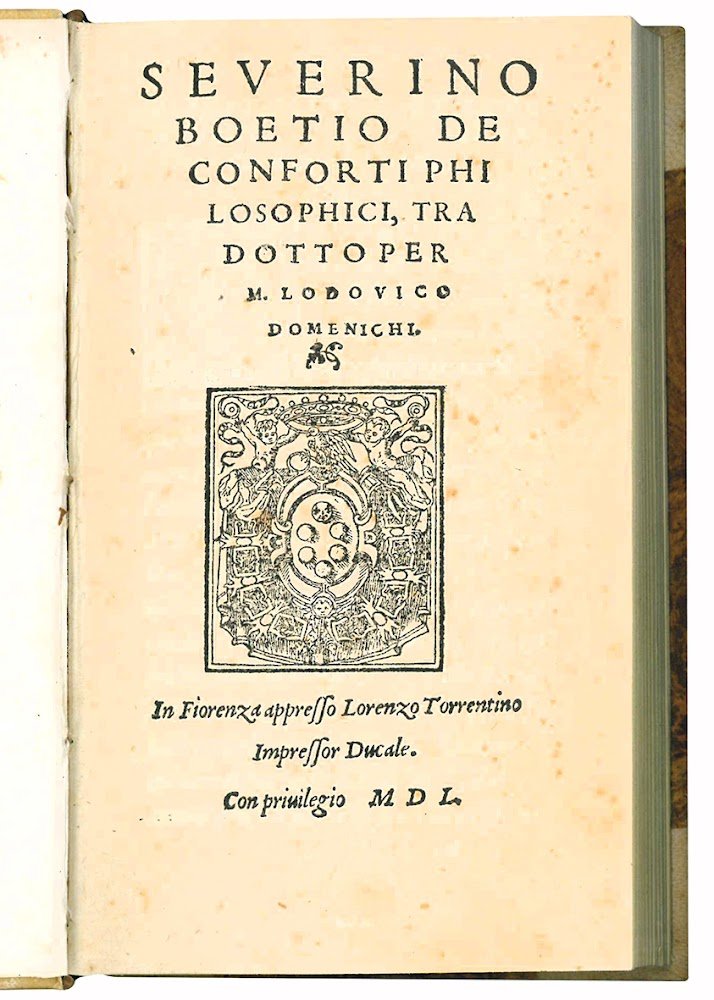
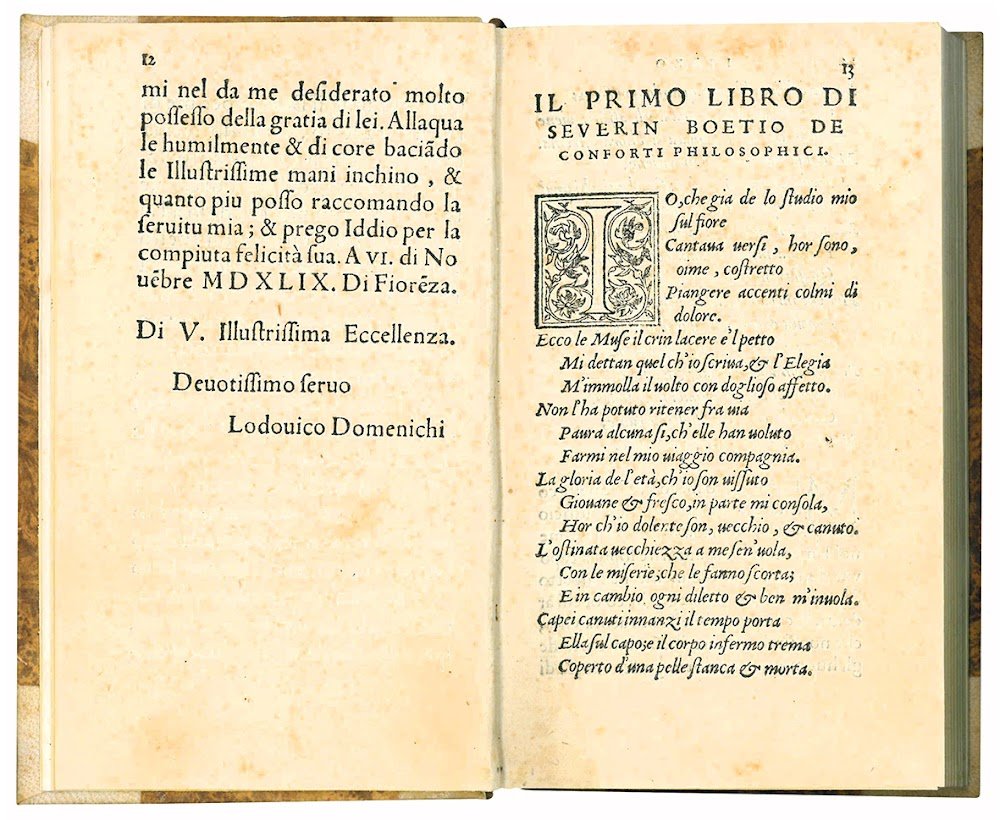
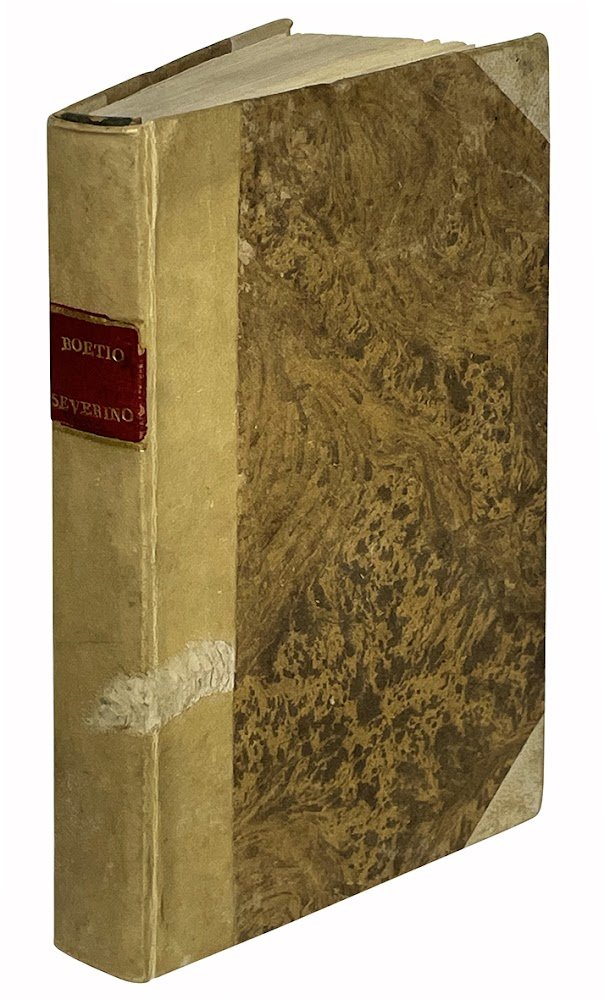
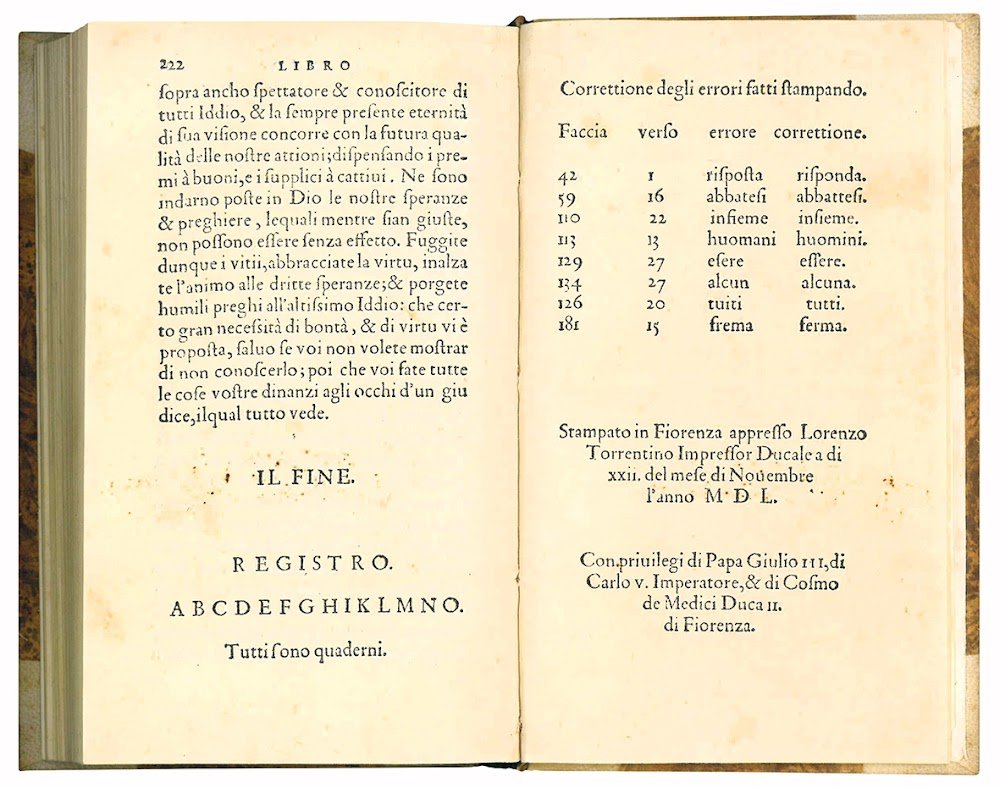
8vo (158x90 mm). 222, [2] pp. Collation: A-O8. Woodcut Medici's arms on title page. Colophon and errata on last leaf verso. Text in prose in roman type, poems in italic. Early 19th-century half vellum, lettering piece on spine. Some light staining and foxing, but a good copy.
First edition of Domenichi's Italian translation of Boethius' De consolatione philosophiae, dedicated by him to the cardinal Ippolito d'Este and to the duke of Florence Cosimo de' Medici. In the late 1540s, Emperor Charles V, in anticipation of his retirement from public life, requested to the Duke of Florence Cosimo I a new Italian version of Boethius' work. The duke entrusted the task to three leading Florentine academics: Cosimo Bartoli, BenedettoVarchi, and Domenichi. All three translations were published by Torrentino between 1550 and 1551. It was Varchi's that met with the greatest success as he better managed to maintain the alternation between verse and prose of the original text.
The reasons for such a revival of Boethius' work in the Florentine academic circles, beyond the imperial commission, are manifold. On the one hand, the ancient philosopher's fame for its extraordinary erudition, his reputation as a translator and commentator on Plato and Aristotle (as well as synthesizer of their philosophies), his influence on Dante, and the widespread belief that he was closed to the Christian spirit. On the other hand, the great consolatory value that that text exerted on men who were effectively exposed to the whims of other more powerful men and of fortune (cf. J. Bryce, Cosimo Bartoli (1503-1572). The Career of a Florentine Polymath, Genève, 1983, pp. 172-176).
Edit 16, CNCE6562; Moreni, pp. 112-114.
